Table of Contents
Every spring and summer, a wave of people end up at the chiropractor because of yard work, and the reason is simple. Raking, lifting bags of mulch, bending over garden beds, and hauling brush all involve the exact movements that stress the lower back the most. At Leading Edge Chiropractic in Holmen WI, Dr. Chad Updike sees this pattern reliably as the weather warms, and a little knowledge goes a long way toward preventing it.
Why Yard Work Is So Hard on Your Back
Yard work combines several of the most demanding movements for the spine into a single afternoon. Repetitive bending and twisting, sustained forward-leaning postures, and heavy lifting are all part of a typical day in the yard. Each one stresses the lower back, and doing them together compounds the effect.
The bigger issue is that yard work tends to be seasonal and intense. People go from a relatively sedentary winter to suddenly spending hours doing physically demanding outdoor work. The body is not conditioned for it, and the spine bears the consequences. This is why the first big yard work weekend of the season sends so many people looking for relief.
Add in the fact that most people use poor body mechanics, bending from the back rather than the legs, and the result is predictable.
The Yard Work Tasks That Cause the Most Trouble
Some yard work activities are harder on the back than others. These are the ones that most commonly lead to problems.
Raking
Raking involves repetitive twisting and pulling, often with the spine in a slightly bent and rotated position. That combination of rotation and repetitive load is tough on the lumbar spine and the muscles that support it. A long raking session can leave the lower back fatigued and vulnerable.
Lifting and Carrying
Bags of mulch, soil, and fertilizer, along with pots, rocks, and brush, all involve heavy lifting. When that lifting is done with poor mechanics, bending at the waist instead of the knees, it places enormous stress on the lumbar discs. This is where acute injuries frequently happen.
Bending Over Garden Beds
Planting, weeding, and tending garden beds involves prolonged forward bending, often held for long stretches. Sustained forward flexion stresses the lumbar discs and the muscles of the lower back. Staying hunched over a garden bed for an hour is harder on the spine than people realize.
Shoveling and Digging
Digging and shoveling combine lifting, twisting, and throwing in one repetitive motion. It is one of the most demanding yard tasks for the back, particularly when the soil is heavy or wet.
How to Protect Your Back During Yard Work
The good news is that most yard work back injuries are preventable with the right approach. A few principles make a real difference.
- Warm up before you start. Treat yard work like the physical activity it is with a few minutes of light movement and stretching.
- Lift with your legs, not your back. Bend at the knees, keep the load close to your body, and avoid twisting while lifting.
- Switch tasks regularly. Do not spend hours doing the same repetitive motion. Alternate activities to avoid overloading one area.
- Take breaks. Step back, stand up straight, and give your back a rest before it starts complaining.
- Use the right tools. Long-handled tools reduce bending, and a wheelbarrow or cart saves your back from carrying heavy loads.
- Pace yourself. You do not have to finish the whole yard in one day. Spreading work across the weekend is easier on your spine.
These habits dramatically reduce the load on your lower back and lower the chance of an injury that sidelines you for the rest of the season.
When Yard Work Has Already Caused a Problem
Sometimes the back pain shows up after the fact. You felt fine during the work, and then the next morning you can barely move. This delayed soreness is common, and it often indicates that the muscles and joints were stressed beyond what they were ready for.
If you have tweaked your back during yard work, addressing it promptly matters. An acute back strain frequently involves spinal misalignment, and the longer it goes uncorrected, the more the surrounding muscles tighten to guard the area. That guarding creates compensation patterns that prolong the problem.
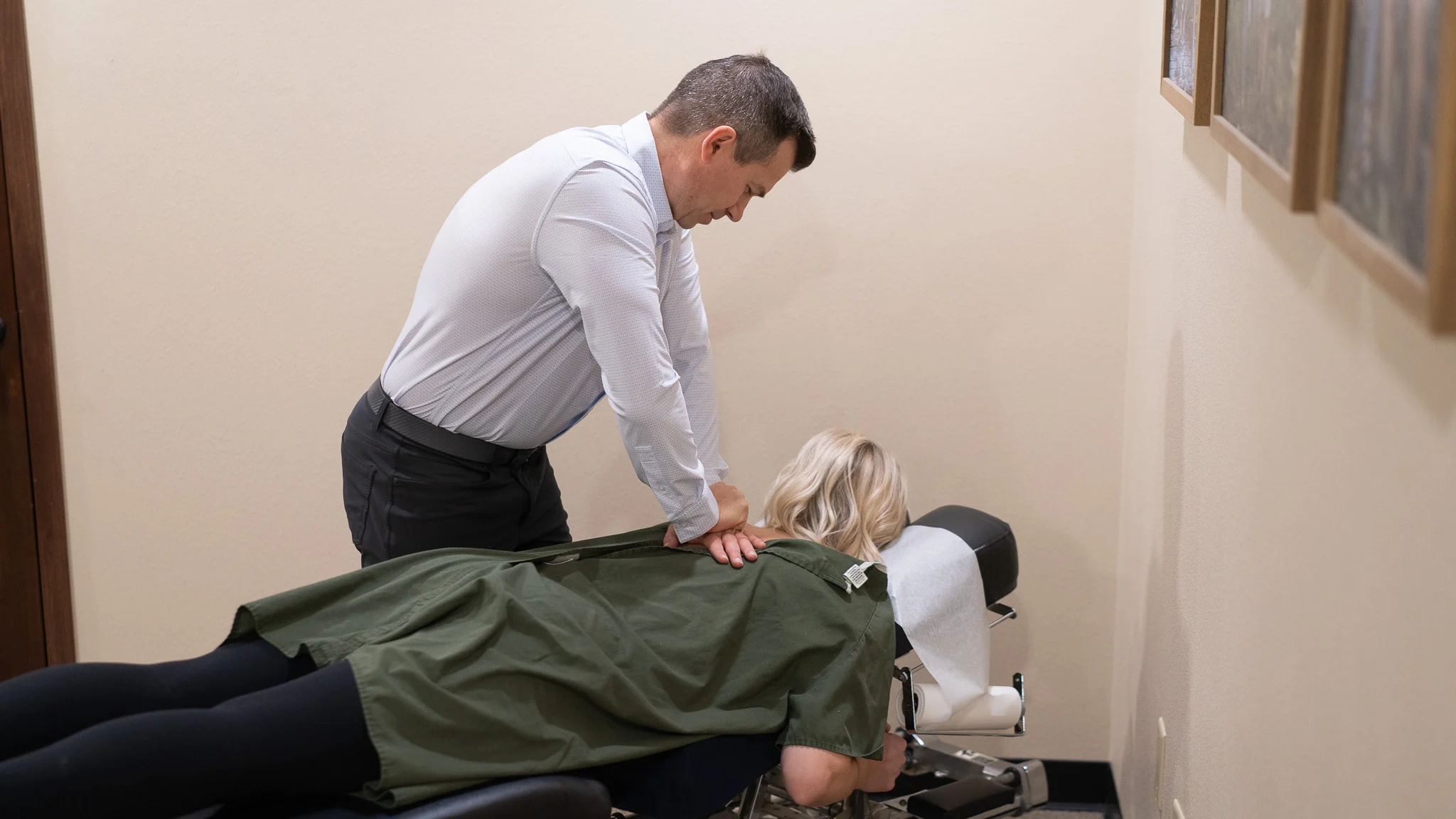
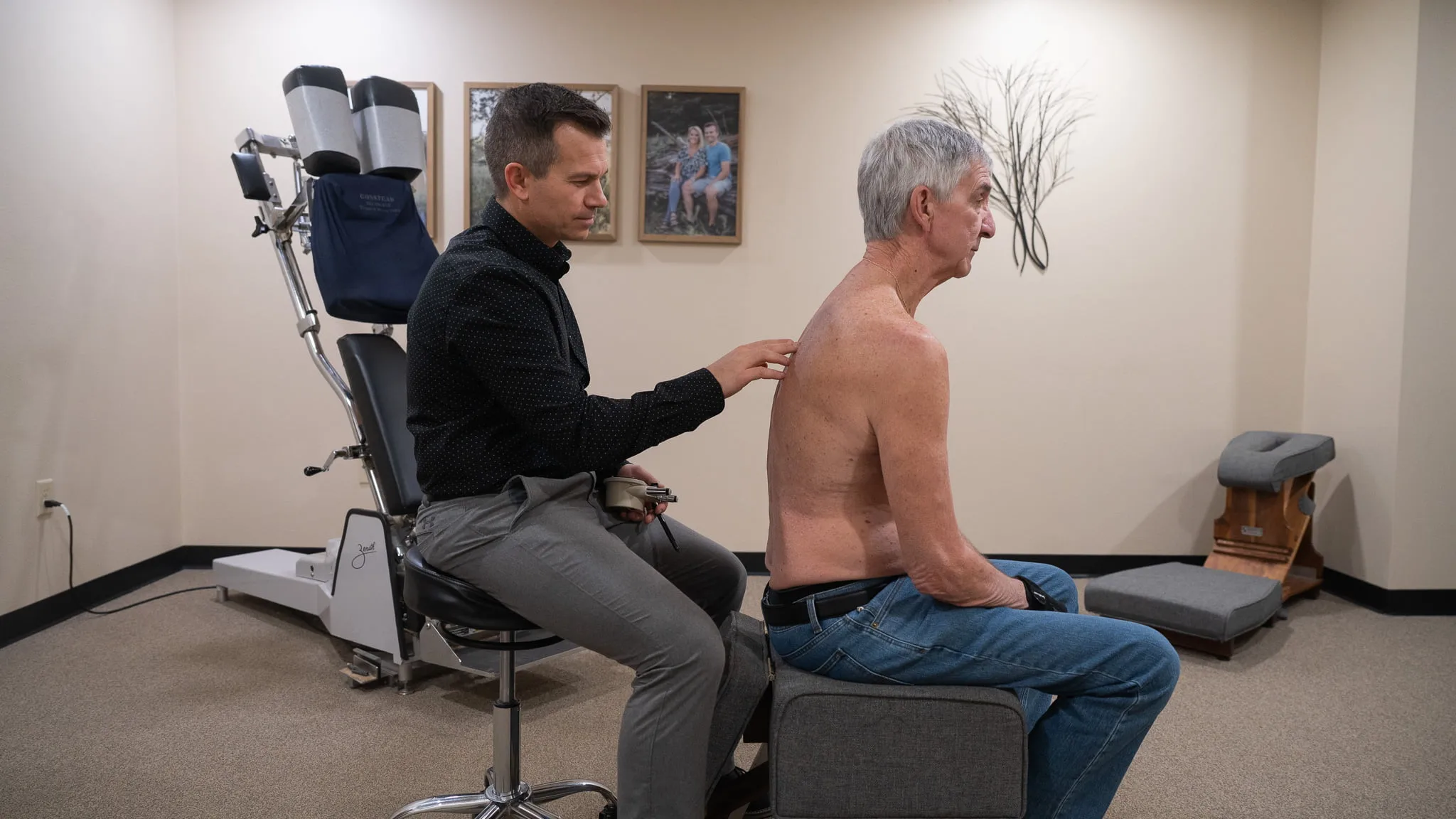
Dr. Chad uses the Gonstead method to identify exactly what was stressed or misaligned and correct it. Most yard work back injuries respond well to chiropractic care, especially when treated early.
Why Getting Ahead of It Matters
Many people in the La Crosse area treat yard work back pain as just part of the season, something to endure until it eases on its own. But the underlying misalignments that cause the pain do not always resolve fully, and they leave the back vulnerable to the next round of yard work or any other physical demand.
Addressing the problem properly, rather than just waiting it out, means your back is in better shape for the rest of the season and less likely to be re-injured the next time you are out in the yard.
Frequently Asked Questions
I’m sore after yard work but it’s not severe. Should I be concerned?
Mild soreness that resolves in a day or two is usually just normal muscle fatigue from unaccustomed activity. But soreness that lingers, worsens, or comes with sharp pain or limited movement is worth getting evaluated. Persistent pain often indicates a misalignment that will not resolve on its own.
How can I keep this from happening every spring?
Conditioning your body before the heavy yard work season helps, as does using proper mechanics throughout. Getting evaluated and correcting any underlying spinal issues means you start the season with a back that is ready for the demands rather than vulnerable to them.
Enjoy Your Yard Without Paying for It
If yard work leaves your back aching every season, there is plenty you can do about it. Contact Leading Edge Chiropractic or call 608-526-2854 to schedule an evaluation with Dr. Chad in Holmen and protect your spine this season.

Leading Edge Chiropractic serves Holmen, WI and the surrounding La Crosse area with precise, results-driven chiropractic care. Dr. Chad Updike and Dr. Katie Canar are both extensively trained in the Gonstead method, bringing a level of specificity and thoroughness to every patient that goes well beyond a standard adjustment. Dr. Chad serves as Team Chiropractor for the Holmen High School football team and has spent a decade on the board of the Chiropractic Society of Wisconsin, including two years as President. Dr. Katie graduated summa cum laude from Palmer College of Chiropractic, holds Webster Certification for prenatal care, and has completed hundreds of hours of advanced Gonstead training. Together they care for patients of all ages, from infants and student-athletes to active adults and seniors. If you’re ready to find out what’s actually driving your symptoms, contact Leading Edge Chiropractic today.