Table of Contents
Recurring lower back pain in Holmen WI is one of the most common complaints Dr. Chad Updike sees at Leading Edge Chiropractic, and the most frustrating part for most patients is not the pain itself. It is that nobody has explained why it keeps coming back. You rest, it settles, life goes back to normal, and then something small sets it off again. That cycle has a cause, and until that cause is found and corrected, the flare-ups will keep happening.
Why the Same Spot Keeps Breaking Down
Most people assume a lower back flare-up is caused by whatever triggered it. A heavy lift, an awkward turn, a long drive. But those triggers are rarely the real problem. They are the last straw for a spine that was already under stress.
The actual cause is almost always a structural issue that has been present between episodes, quietly building load on the surrounding joints, discs, and muscles. When those structures finally hit their limit, the back goes out. The trigger gets the blame, but the underlying problem is what made the spine vulnerable in the first place.
At Leading Edge Chiropractic, Dr. Chad spends time on exactly this question with every recurring back pain patient. What is happening in the spine between episodes matters just as much as what happens during one.
The Most Common Structural Drivers
Recurring lower back problems almost always trace back to one or more of these patterns. All of them show up clearly during a thorough Gonstead spinal evaluation.
Vertebral Misalignment
When a lumbar vertebra shifts out of its proper position, it changes how load distributes through the surrounding segments. The joints above and below take on more stress than they are built for. The muscles supporting that area fatigue trying to compensate. When those muscles finally give out under load, the back goes out. The misalignment that started the process is still there after the flare-up settles, ready to drive the next one.
Disc Stress
Spinal discs depend on proper joint mechanics to stay hydrated and healthy. When mechanics are off for months or years, discs compress unevenly and begin to thin or bulge. A disc under chronic abnormal load does not need much provocation to become acutely painful. This is why something as ordinary as sneezing can trigger a severe episode in someone whose disc has been under stress for a long time.
Sacroiliac Joint Dysfunction
The sacroiliac joints connect the base of the spine to the pelvis. When they shift out of normal position, they produce lower back and hip pain that is frequently mistaken for a lumbar spine problem. Many patients treated repeatedly for lumbar issues actually have a pelvis that is not moving correctly. Addressing the lumbar spine without correcting the sacroiliac joints leaves a major driver of lower back pain completely untouched.
Muscle Compensation Patterns
Every time the back goes out, surrounding muscles guard the area by tightening up. That protective tension helps short term. But if the structural problem is never corrected, those muscles stay guarded long after the episode resolves. Chronic muscle guarding compresses the spine further and lowers the threshold for the next flare-up. The cycle feeds itself.
Why Rest and Medication Keep You Stuck
Rest and anti-inflammatories have a role in the acute phase of a lower back episode. They reduce pain and allow inflammation to settle. But they do not correct misalignment, restore disc mechanics, or address sacroiliac dysfunction. They get you functional, not fixed.
This is why so many people feel better after a few days of rest and then re-injure doing something completely ordinary. The spine returned to exactly the same state it was in before the flare-up, with every vulnerability still intact.
What a Proper Evaluation Actually Looks Like
When a recurring back pain patient comes to Leading Edge Chiropractic, Dr. Chad does not start adjusting. He starts by building a complete picture. How long has this been happening. What triggers episodes. What makes it better or worse. What has already been tried.
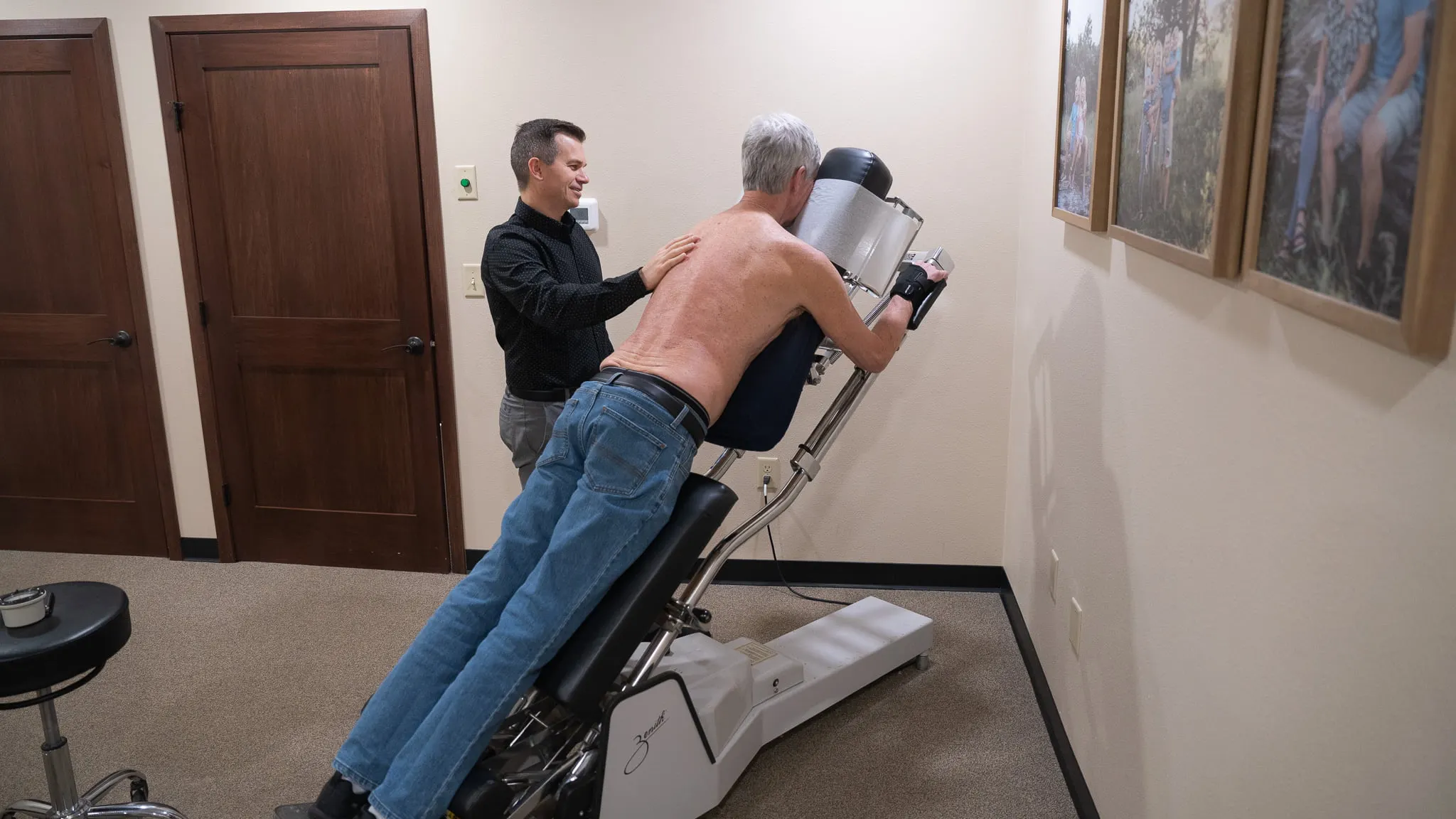
The Gonstead analysis then identifies exactly which spinal segments are misaligned, how the pelvis is positioned, and where nerve irritation is present. X-rays are taken when they add useful structural information. The result is a specific understanding of what is driving the cycle, not just a general label of lower back pain.
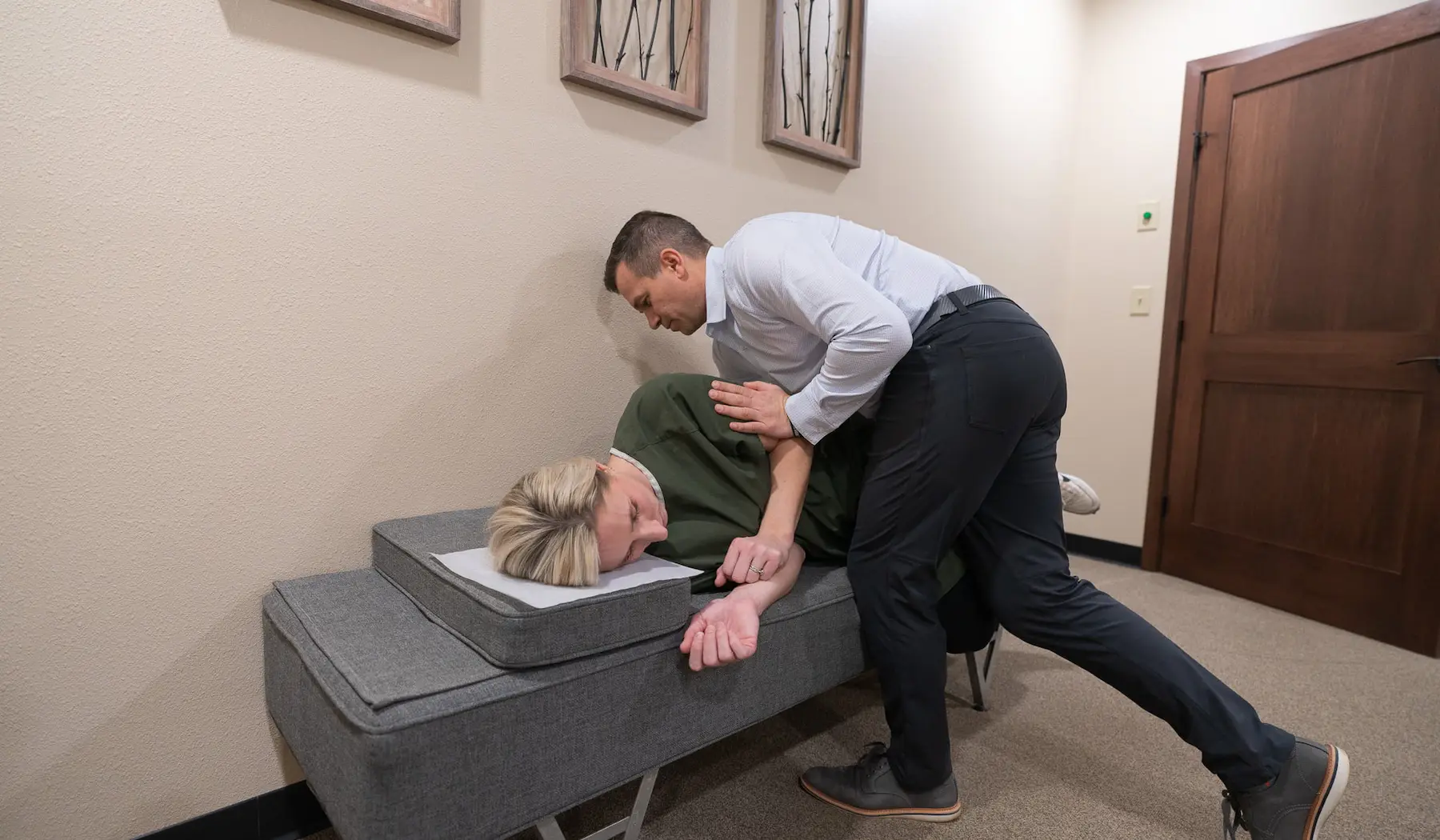
Care is targeted to what the evaluation actually found. Adjustments are made only where they are indicated. Every follow-up visit includes a reassessment so progress is tracked and the approach shifts based on how the spine is responding.
How Long Until the Cycle Breaks
That depends on how long the underlying problem has been present and how much structural change has occurred. Recent problems in otherwise healthy spines often respond within a handful of visits. Long-standing misalignments with disc involvement or significant muscle compensation take longer but still respond well to consistent care.
Dr. Chad gives every patient an honest picture of what to expect based on their specific findings. There is no pressure to commit to a plan before you understand what you are dealing with.
Frequently Asked Questions
Is it safe to get adjusted during a flare-up?
In most cases yes. Chiropractic care during an acute episode is often very helpful because it addresses the misalignment driving the pain rather than waiting for it to subside on its own. Dr. Chad adapts his technique based on how acute the situation is on any given day.
My MRI came back normal. Why does my back still hurt?
MRI findings and pain levels often do not match. Many patients with significant imaging findings have no pain, and many patients in significant pain have normal-looking images. Pain is driven by nerve irritation and mechanical dysfunction, both of which chiropractic addresses directly regardless of what imaging shows.
Will I need to keep coming forever?
Not necessarily. The goal at Leading Edge is correction, not dependency. Many patients complete a course of care, reach their goals, and then choose periodic maintenance visits to stay ahead of problems. That decision is always yours to make.
Break the Cycle for Good
If your lower back has been going out repeatedly and nobody has explained why, it is time to find out what is actually driving it. Contact Leading Edge Chiropractic or call 608-526-2854 to schedule an evaluation with Dr. Chad in Holmen and get a real answer.

Leading Edge Chiropractic serves Holmen, WI and the surrounding La Crosse area with precise, results-driven chiropractic care. Dr. Chad Updike and Dr. Katie Canar are both extensively trained in the Gonstead method, bringing a level of specificity and thoroughness to every patient that goes well beyond a standard adjustment. Dr. Chad serves as Team Chiropractor for the Holmen High School football team and has spent a decade on the board of the Chiropractic Society of Wisconsin, including two years as President. Dr. Katie graduated summa cum laude from Palmer College of Chiropractic, holds Webster Certification for prenatal care, and has completed hundreds of hours of advanced Gonstead training. Together they care for patients of all ages, from infants and student-athletes to active adults and seniors. If you’re ready to find out what’s actually driving your symptoms, contact Leading Edge Chiropractic today.