Table of Contents
Wrestling is one of the most physically demanding sports a young athlete can compete in, and it produces a very specific set of spinal and structural injuries that most wrestlers simply push through. At Leading Edge Chiropractic in Holmen WI, Dr. Chad Updike works with wrestlers throughout the La Crosse area and sees the same patterns consistently. Understanding what the sport does to the body is the first step toward staying healthy through a full season.
What Wrestling Does to the Spine
Wrestling loads the spine in ways that few other sports match. Every takedown, scramble, and defensive position involves extreme spinal flexion, rotation, and compression happening simultaneously and at high speed. The cervical spine is particularly vulnerable because so many wrestling positions involve the neck being loaded in awkward angles under significant force.
Unlike contact sports where impact is more predictable and comes from a specific direction, wrestling involves constant unpredictable loading in multiple planes. That unpredictability means the spine rarely gets a chance to brace properly before the next load arrives. The cumulative effect over a season of daily practice and weekly competition is significant even for athletes who never experience a dramatic acute injury.
The Most Common Wrestling-Related Structural Problems
Dr. Chad sees a consistent set of structural issues in wrestlers who come to Leading Edge Chiropractic. Most of them have been dealing with symptoms for weeks or months before seeking care.
Cervical Misalignment From Neck Loading
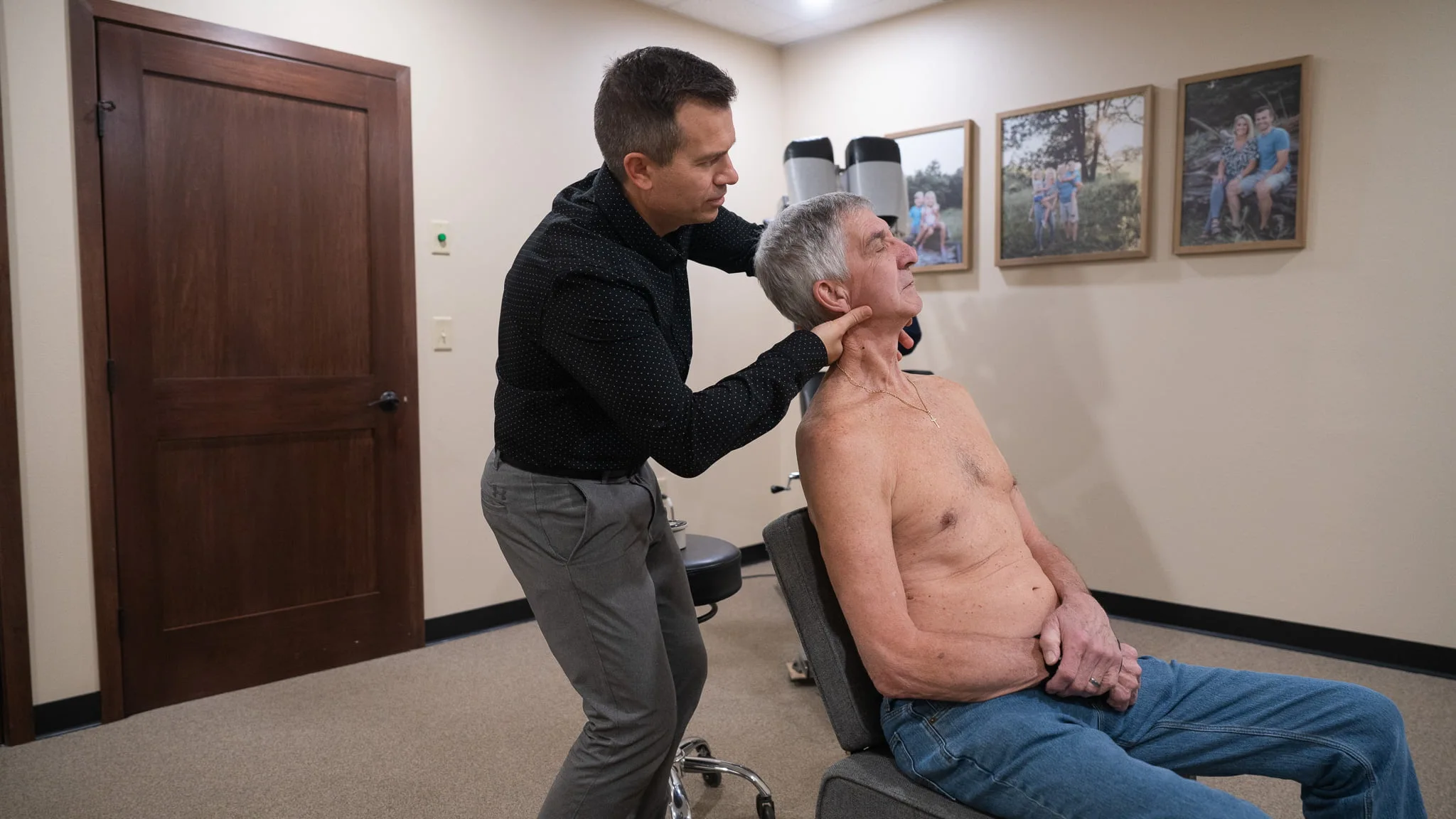
The neck takes an enormous amount of stress in wrestling. Bridge positions, cradles, and defensive scrambles all load the cervical spine in extreme positions under body weight. Upper and mid-cervical misalignments are extremely common in wrestlers and produce neck stiffness, headaches, and in some cases pain or numbness radiating into the shoulder and arm. Many wrestlers accept this as part of the sport without realizing it is a structural problem that responds very well to chiropractic care.
Lumbar and Thoracic Compression
Repeated spinal compression from takedowns, being driven into the mat, and explosive wrestling movements creates significant stress on the lumbar and thoracic segments. Wrestlers who describe chronic mid-back or lower back pain throughout the season are almost always dealing with accumulated compression that has shifted spinal segments out of proper alignment. Rest between matches and practices provides partial recovery, but it does not correct the underlying misalignment.
Rib and Thoracic Joint Dysfunction
The ribs attach to the thoracic vertebrae at small joints that can be jostled out of position by the compressive and rotational forces of wrestling. A rib that is slightly displaced produces sharp, catching pain with deep breathing, twisting, or reaching overhead. This is one of the more immediately uncomfortable wrestling-related injuries and one of the most responsive to chiropractic adjustment. Most wrestlers who come in with this complaint notice rapid improvement within one or two visits.
Sacroiliac Joint Stress
The explosive hip and leg movements of wrestling place significant rotational stress on the sacroiliac joints. SI joint dysfunction produces lower back and hip pain that is often mistaken for a muscle strain. Wrestlers who have been stretching the same area repeatedly without improvement frequently have an SI joint component that stretching alone cannot address.
Why Wrestlers Push Through Instead of Seeking Care
Wrestling culture values toughness. Sitting out practice or missing a match because something hurts runs against the grain of how most wrestlers think about competition. The result is that structural problems accumulate through the season while the athlete continues competing on a spine that is increasingly compromised.
This approach has a cost. Wrestlers who compete through structural dysfunction develop compensation patterns that redistribute load to adjacent areas and create secondary injuries. An athlete who toughs out cervical pain all season may end their year with a shoulder problem that developed because the neck mechanics were never corrected. Getting evaluated and treated does not require sitting out. It requires addressing the problem while continuing to compete.
How Chiropractic Keeps Wrestlers on the Mat
The sports chiropractic approach at Leading Edge Chiropractic focuses on keeping wrestlers competing rather than pulling them off the mat for extended rest. The Gonstead analysis identifies exactly which segments are misaligned and how they are affecting performance and pain levels. Targeted adjustments correct those specific issues without a lengthy recovery protocol.
Most acute wrestling-related spinal problems respond quickly to chiropractic care when they are addressed promptly. A cervical misalignment from a Tuesday practice that is adjusted on Wednesday performs very differently than one that is left alone for three weeks while the surrounding muscles tighten around it. Early intervention consistently produces faster results.
Dr. Chad works with wrestlers’ competition schedules throughout the La Crosse area. Care is planned around practice and match schedules so athletes get the structural support they need without disrupting their season.
Preseason Evaluation for Wrestlers
The same principle that applies to football applies to wrestling. Starting the season with a properly aligned spine means entering competition with full structural resilience rather than carrying forward the problems from last season. A preseason evaluation catches residual issues from the previous year and corrects them before the demands of a new season begin.
Youth wrestlers in particular benefit from regular chiropractic evaluation because growing bodies are more responsive to correction and because structural habits established during adolescent competition carry into adult health.
Get Your Wrestler Evaluated in Holmen
If a wrestler in your household is pushing through pain or dealing with recurring stiffness that never fully resolves between matches, it is time to find out what is actually going on structurally. Contact Leading Edge Chiropractic or call 608-526-2854 to schedule an evaluation with Dr. Chad in Holmen and get your athlete the structural support they need to compete at their best.

Leading Edge Chiropractic serves Holmen, WI and the surrounding La Crosse area with precise, results-driven chiropractic care. Dr. Chad Updike and Dr. Katie Canar are both extensively trained in the Gonstead method, bringing a level of specificity and thoroughness to every patient that goes well beyond a standard adjustment. Dr. Chad serves as Team Chiropractor for the Holmen High School football team and has spent a decade on the board of the Chiropractic Society of Wisconsin, including two years as President. Dr. Katie graduated summa cum laude from Palmer College of Chiropractic, holds Webster Certification for prenatal care, and has completed hundreds of hours of advanced Gonstead training. Together they care for patients of all ages, from infants and student-athletes to active adults and seniors. If you’re ready to find out what’s actually driving your symptoms, contact Leading Edge Chiropractic today.