Table of Contents
Dizziness is one of the most unsettling symptoms a person can experience, and the cause is not always obvious. For many people, ongoing dizziness or a vague sense of being off-balance is connected to the upper cervical spine, the top of the neck, rather than the inner ear or anything else they might suspect. At Leading Edge Chiropractic in Holmen WI, Dr. Chad Updike evaluates the neck’s role in dizziness because it is a connection most people never consider.
How the Neck Affects Balance
Your sense of balance depends on three systems working together. The inner ear, the eyes, and the position sensors in your joints and muscles all send information to the brain about where your body is in space. The upper cervical spine is packed with these position sensors, and it plays a significant role in feeding the brain accurate information about head and neck position.
When the upper cervical joints are misaligned or not moving correctly, the information they send to the brain becomes faulty. The brain receives conflicting signals, with the neck sensors saying one thing while the eyes and inner ear say another. That mismatch can produce dizziness, unsteadiness, and a sense of disorientation.
This type of dizziness has a name. It is called cervicogenic dizziness, meaning dizziness that originates from the neck. It is far more common than most people realize.
What Cervicogenic Dizziness Feels Like
Cervicogenic dizziness has some characteristic features that distinguish it from other causes. Recognizing the pattern helps explain why the neck may be involved.
- A sense of unsteadiness or imbalance rather than a spinning sensation
- Dizziness that worsens with certain neck movements or positions
- Symptoms that often accompany neck pain or stiffness
- A feeling of being lightheaded or disoriented that comes and goes
- Dizziness that increases after holding the head in one position for a while
One of the most telling signs is that the dizziness is connected to neck movement or neck pain. If your dizziness tends to show up alongside a stiff or painful neck, or worsens when you turn or tilt your head, the cervical spine is a likely contributor.
Why This Connection Gets Missed
Most people who experience dizziness focus on the inner ear, and inner ear conditions are certainly a common cause. But when inner ear evaluations come back normal and the dizziness continues, patients are often left without a clear answer.
The neck is frequently overlooked in this process. Many providers do not evaluate the cervical spine as a potential source of dizziness, so patients can go a long time without anyone examining the connection. This is part of why people throughout the La Crosse area who have struggled with unexplained dizziness are often surprised to learn the neck may be involved.
The upper cervical spine is also where injuries like whiplash commonly cause misalignment. Many cases of cervicogenic dizziness trace back to an old accident or injury that affected the top of the neck and was never fully addressed.
How the Gonstead Method Evaluates the Upper Neck
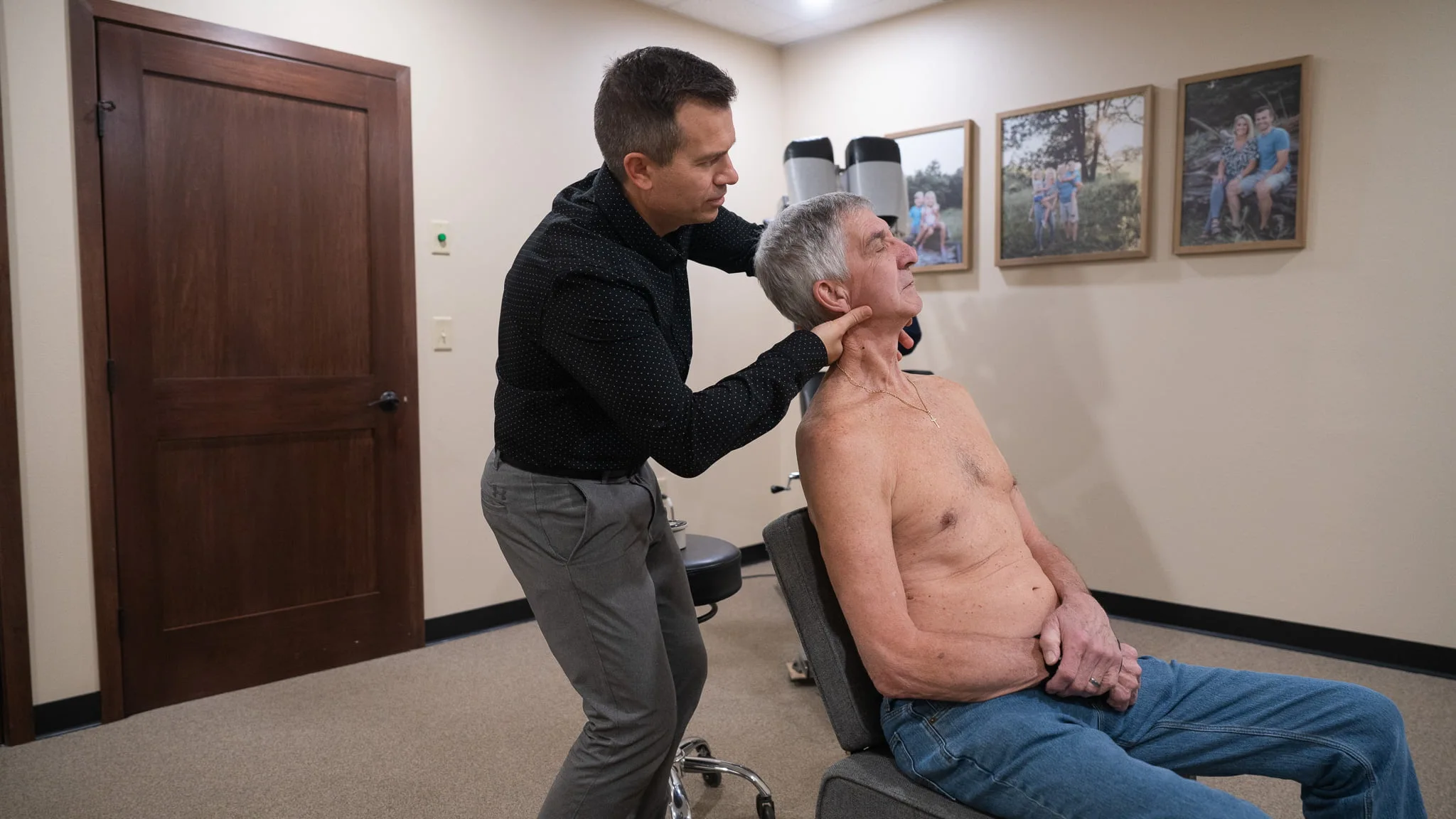
The Gonstead method used at Leading Edge Chiropractic is well suited to evaluating the upper cervical spine with precision. The analysis identifies whether the top cervical segments are misaligned, restricted, or irritating the surrounding structures. The nervoscope detects nerve irritation, palpation assesses joint movement and tenderness, and X-rays provide a structural view when appropriate.
Because the upper cervical spine is so important to balance, identifying and correcting misalignment in this region can directly address the faulty position information the brain is receiving. When the joints move correctly and the alignment is restored, the sensors send accurate signals again, and the dizziness often improves.
Chiropractic Care and Dizziness Recovery
For patients whose dizziness has a cervical component, chiropractic care that addresses the upper cervical spine can produce meaningful improvement. As the misalignment is corrected and the joints begin moving properly, the conflicting signals to the brain are reduced, and balance often improves.
Dr. Chad is direct with patients about what chiropractic can and cannot do here. Cervicogenic dizziness responds well to care that addresses the neck. Dizziness from other causes, such as certain inner ear conditions, may require different treatment. Part of the evaluation is determining whether the neck is genuinely contributing, and if something else appears to be the primary cause, he will refer appropriately.
When Dizziness Needs Immediate Medical Attention
While much dizziness is benign and treatable, certain situations require prompt medical evaluation rather than chiropractic care first. Seek medical attention right away if dizziness is sudden and severe, accompanied by slurred speech, facial drooping, severe headache, vision changes, or weakness on one side of the body. These can be signs of a serious medical event.
For ongoing dizziness connected to neck pain and movement, where serious causes have been ruled out, the cervical spine is well worth evaluating.
Frequently Asked Questions
How do I know if my dizziness is coming from my neck?
The clearest signs are dizziness that accompanies neck pain or stiffness, worsens with neck movement, or feels more like unsteadiness than spinning. A thorough cervical evaluation can determine whether the neck is contributing. If you have had dizziness with normal inner ear testing, the neck is worth examining.
Can an old injury cause dizziness years later?
Yes. An injury like whiplash that misaligned the upper cervical spine can contribute to dizziness long after the initial injury, especially if it was never properly addressed. The misalignment continues to send faulty signals to the brain until it is corrected.
Get to the Bottom of Your Dizziness
If you have been dealing with dizziness and no one has examined your neck, that may be the missing piece. Contact Leading Edge Chiropractic or call 608-526-2854 to schedule an evaluation with Dr. Chad in Holmen and find out whether your neck is involved.

Leading Edge Chiropractic serves Holmen, WI and the surrounding La Crosse area with precise, results-driven chiropractic care. Dr. Chad Updike and Dr. Katie Canar are both extensively trained in the Gonstead method, bringing a level of specificity and thoroughness to every patient that goes well beyond a standard adjustment. Dr. Chad serves as Team Chiropractor for the Holmen High School football team and has spent a decade on the board of the Chiropractic Society of Wisconsin, including two years as President. Dr. Katie graduated summa cum laude from Palmer College of Chiropractic, holds Webster Certification for prenatal care, and has completed hundreds of hours of advanced Gonstead training. Together they care for patients of all ages, from infants and student-athletes to active adults and seniors. If you’re ready to find out what’s actually driving your symptoms, contact Leading Edge Chiropractic today.