Table of Contents
A pinched nerve can produce symptoms that range from mildly annoying to genuinely alarming, and knowing the warning signs helps you understand what is happening and when to act. A pinched nerve occurs when surrounding tissue puts too much pressure on a nerve, disrupting its function and producing pain, numbness, tingling, or weakness. At Leading Edge Chiropractic in Holmen WI, Dr. Chad Updike identifies where nerves are being compressed and addresses the source of the pressure.
What a Pinched Nerve Actually Is
The term pinched nerve describes what happens when a nerve is compressed or irritated by the tissues around it. That pressure can come from a misaligned vertebra, a bulging or herniated disc, tight muscles, or inflammation in the surrounding area.
Nerves are how your brain communicates with the rest of your body. When a nerve is compressed, that communication gets disrupted. Depending on which nerve is affected and where, the result can show up as pain, altered sensation, or muscle weakness in whatever area that nerve serves.
Pinched nerves happen most commonly in the neck and lower back, where the spine’s nerve roots are most susceptible to compression. But the symptoms often show up away from the actual site of compression, which is part of what makes them confusing.
The Warning Signs to Watch For
Pinched nerve symptoms have some characteristic features. Recognizing them helps you identify what you might be dealing with.
Radiating Pain
One of the hallmark signs of a pinched nerve is pain that radiates or travels along the path of the nerve. A pinched nerve in the lower back can send pain down through the buttock and leg, as in sciatica. A pinched nerve in the neck can send pain down into the shoulder and arm. This traveling quality distinguishes nerve pain from ordinary muscle soreness that stays in one place.
Numbness and Tingling
That pins and needles sensation, or a feeling of numbness, is a classic sign of nerve involvement. It often follows the path of the affected nerve. If you feel numbness or tingling in specific fingers, part of your hand, or down your leg into your foot, a pinched nerve is a likely explanation.
Muscle Weakness
When a nerve is significantly compressed, it can affect the muscles it controls, producing weakness. You might notice a weaker grip, difficulty lifting your foot, or a general sense that a limb is not as strong as it should be. Weakness is a sign that the compression is meaningful and worth evaluating promptly.
A Burning or Electric Sensation
Pinched nerves often produce a distinctive burning, sharp, or electric-shock-like sensation rather than the dull ache of a muscle problem. This quality of the pain is a strong clue that a nerve is involved rather than just soft tissue.
Why You Shouldn’t Ignore These Signs
A pinched nerve is not something to simply wait out indefinitely. While some cases resolve on their own, ongoing nerve compression can cause problems if left unaddressed. Prolonged pressure on a nerve can lead to increasing symptoms and, in some cases, longer-lasting nerve dysfunction.
The pattern Dr. Chad often sees is a patient who ignored numbness or radiating pain for weeks or months, assuming it would go away, only to find it gradually worsening. The longer a nerve is compressed, the longer it can take to fully recover once the pressure is relieved. Addressing it earlier consistently leads to better outcomes.
There is also the matter of what is causing the compression. A pinched nerve is a symptom of an underlying problem, whether that is a misalignment, a disc issue, or something else. Identifying and addressing that cause matters beyond just relieving the immediate symptoms.
How Chiropractic Care Helps a Pinched Nerve
Chiropractic care is one of the most direct ways to address a pinched nerve, because it targets the mechanical pressure causing the problem. If a misaligned vertebra or a disc is compressing the nerve, relieving that pressure is exactly what chiropractic aims to do.
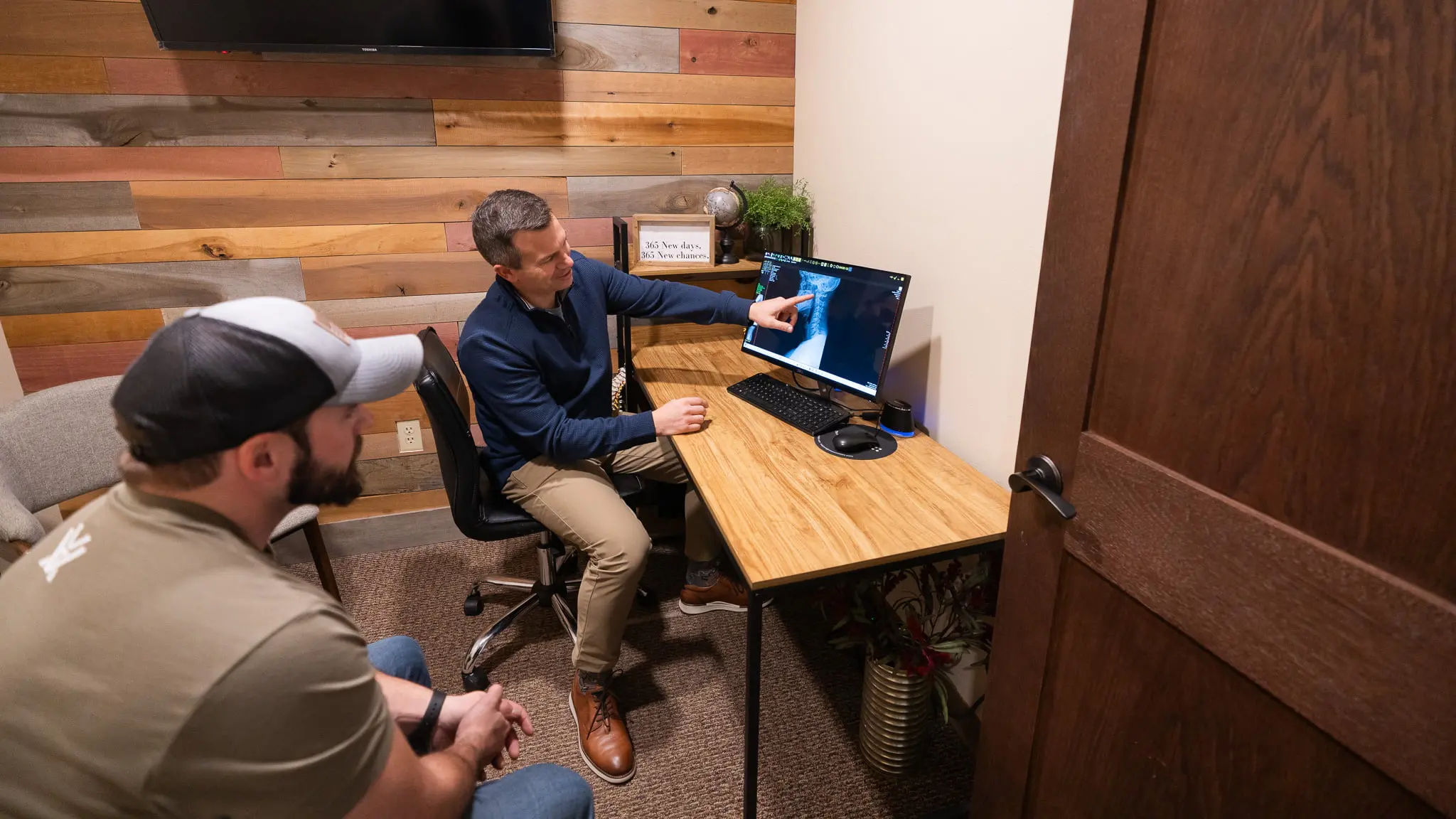
Dr. Chad uses the Gonstead method to locate precisely where the nerve is being compressed. The nervoscope detects nerve irritation along the spine, and the rest of the analysis identifies which segment is involved and how. This precision is valuable with nerve compression because it ensures care is directed at the actual source.
Targeted adjustments restore proper alignment and motion to the affected segment, which relieves the pressure on the nerve. As the compression is reduced, the nerve can begin to recover and the symptoms typically improve. Many patients in the La Crosse area find significant relief through this conservative approach.
When a Pinched Nerve Needs Urgent Attention
Most pinched nerves respond well to conservative care, but certain symptoms indicate a situation that needs prompt medical evaluation.
- Progressive or significant muscle weakness
- Loss of bladder or bowel control
- Numbness in the saddle region between the legs
- Symptoms that are rapidly worsening
These are warning signs that require immediate medical attention. Dr. Chad screens for these during the evaluation. For the large majority of pinched nerve cases without these red flags, chiropractic care is an effective conservative option.
Frequently Asked Questions
How long does a pinched nerve take to heal?
It varies depending on the severity of the compression and how long it has been present. Mild cases addressed early may resolve relatively quickly. More significant or long-standing compression takes longer. Relieving the pressure through chiropractic care supports the nerve’s recovery, but the timeline depends on the individual situation.
Can a pinched nerve go away on its own?
Some mild cases do resolve on their own, particularly if whatever was causing the temporary compression eases. But if the cause is a structural issue like a misalignment or disc problem, the compression is likely to persist or recur until that cause is addressed. Ongoing or worsening symptoms should be evaluated.
Address the Source of Your Nerve Pain
If you are experiencing radiating pain, numbness, tingling, or weakness, a pinched nerve may be the cause, and it is worth addressing. Contact Leading Edge Chiropractic or call 608-526-2854 to schedule an evaluation with Dr. Chad in Holmen.

Leading Edge Chiropractic serves Holmen, WI and the surrounding La Crosse area with precise, results-driven chiropractic care. Dr. Chad Updike and Dr. Katie Canar are both extensively trained in the Gonstead method, bringing a level of specificity and thoroughness to every patient that goes well beyond a standard adjustment. Dr. Chad serves as Team Chiropractor for the Holmen High School football team and has spent a decade on the board of the Chiropractic Society of Wisconsin, including two years as President. Dr. Katie graduated summa cum laude from Palmer College of Chiropractic, holds Webster Certification for prenatal care, and has completed hundreds of hours of advanced Gonstead training. Together they care for patients of all ages, from infants and student-athletes to active adults and seniors. If you’re ready to find out what’s actually driving your symptoms, contact Leading Edge Chiropractic today.