Table of Contents
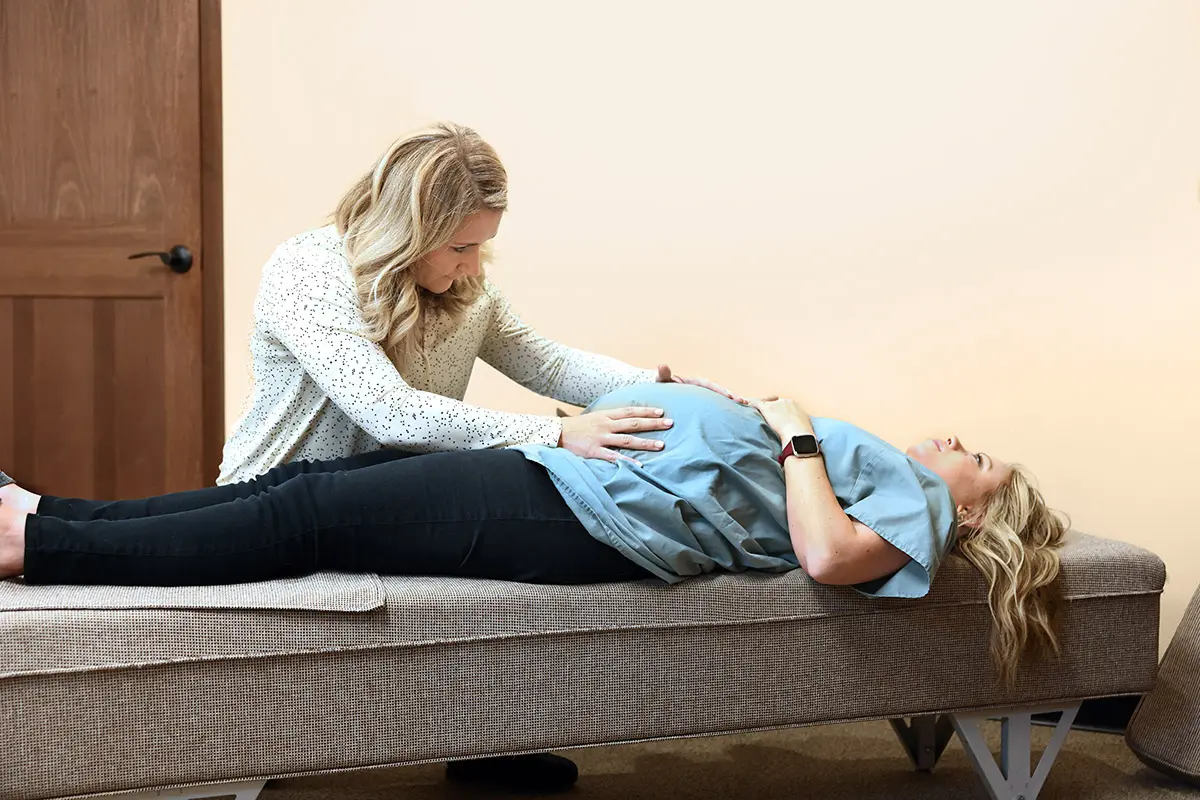
Chiropractic care during pregnancy is safe, gentle, and – for many expecting mothers – one of the most helpful things they do for their bodies throughout the process. At Leading Edge Chiropractic in Holmen, Dr. Katie is Webster Certified, which means she has specific training in prenatal chiropractic care and the techniques designed for expecting mothers at every stage of pregnancy.
Why Pregnancy Changes Everything for Your Spine and Pelvis
Pregnancy puts the body through a remarkable amount of change in a relatively short window of time. The obvious part is the growing belly – but what that growth does to posture, pelvic alignment, and spinal mechanics is less obvious and worth understanding.
As the baby grows, the center of gravity shifts forward. The lumbar spine compensates by increasing its curve, the pelvis tilts, and the surrounding muscles work harder to hold everything upright. At the same time, the hormone relaxin – which is produced throughout pregnancy to help loosen ligaments for delivery – makes joints throughout the body more mobile and less stable than usual. That combination of increased postural demand and decreased joint stability is exactly the environment where spinal and pelvic dysfunction tends to develop.
The result for many pregnant women is low back pain, pelvic pain, round ligament discomfort, hip tightness, or a general sense of being out of alignment that builds as the pregnancy progresses. These aren’t things you simply have to accept as part of being pregnant. They’re mechanical problems – and mechanical problems respond well to chiropractic care.
What Is Webster Certification and Why Does It Matter
The Webster Technique is a specific chiropractic analysis and adjustment approach developed for pregnant patients. It focuses on the sacrum and pelvis – evaluating the alignment of these structures and addressing any restriction or dysfunction that affects how the pelvis functions during pregnancy.
Webster Certification means the chiropractor has completed specific training through the International Chiropractic Pediatric Association in this technique and its application for pregnant patients. It’s not a general chiropractic skill – it’s a specific credential that reflects focused study in prenatal care.
Dr. Katie holds Webster Certification and has a genuine passion for caring for expecting mothers. It’s one of her favorite patient populations, and that shows in how she approaches prenatal visits – with patience, gentleness, and a thorough understanding of what the pregnant body actually needs at each stage.
What Prenatal Chiropractic Care Actually Involves
A common concern from patients who haven’t experienced prenatal chiropractic is whether the adjustments are safe with a baby on board. The short answer is yes – and the technique itself is designed around that reality.
Adjustments during pregnancy are significantly gentler than standard adult care. Positioning is adapted so you’re never face-down on a standard table. Special pregnancy pillows or modified table positions allow you to lie comfortably without any pressure on the abdomen. The forces used are lighter, the approach is more focused, and the whole visit is calibrated to what your body can handle comfortably at that stage of pregnancy.
The Gonstead analysis that Dr. Katie uses applies here as well – she’s identifying specific areas of restriction rather than making broad adjustments across the whole spine. That precision matters even more during pregnancy, when the goal is to address exactly what needs addressing without unnecessary force elsewhere.
Common Symptoms Prenatal Chiropractic Helps With
The conditions that bring pregnant patients through our door most often include:
Low back pain from the shifting center of gravity and increased lumbar curve. This is the most common complaint, and it responds well to gentle sacral and lumbar adjustments that restore normal mechanics to those areas. If you’re dealing with back pain during pregnancy, chiropractic is often the most effective drug-free option available.
Pelvic pain and instability driven by the combination of relaxin loosening ligaments and postural changes creating uneven load across the pelvis. Sacroiliac joint dysfunction is particularly common during pregnancy and responds well to specific pelvic adjustments.
Round ligament pain – the sharp, pulling sensation in the lower abdomen or groin that many women experience in the second trimester. While chiropractic doesn’t directly treat the round ligaments, improving pelvic alignment and reducing tension in the surrounding structures often provides meaningful relief.
Hip tightness and sciatica-type symptoms driven by pelvic imbalance and the pressure that a growing uterus can place on surrounding nerves. When the pelvis is properly aligned, there’s less mechanical pressure on these structures. If you’ve had sciatic symptoms during pregnancy, this is often the reason they develop – and why addressing pelvic alignment helps resolve them.
Neck pain and upper back tension that develops as posture shifts throughout pregnancy. Many women compensate for the forward weight shift by rounding the upper back and tightening the neck and shoulders. Gentle cervical and thoracic adjustments address this directly.
The Webster Technique and Optimal Fetal Positioning
One of the most well-known applications of the Webster Technique is its role in supporting optimal fetal positioning as the pregnancy progresses toward delivery. When the pelvis is restricted or asymmetrical, it can limit the space available for the baby to move freely into the ideal head-down position for birth.
The Webster Technique aims to reduce sacral subluxation and the associated tension in the uterine ligaments, creating a more balanced pelvic environment. Many providers – including midwives and OBGYNs – are familiar with the Webster Technique and refer patients to Webster Certified chiropractors for this reason.
It’s worth being clear: chiropractic doesn’t manually move the baby. What it does is address the mechanical restrictions in the pelvis that may be limiting the space the baby needs to position well on its own. The body takes care of the rest.
When to Start Prenatal Chiropractic Care
There’s no wrong time to start. Many patients begin chiropractic care before pregnancy as part of their preparation – making sure the pelvis and spine are in good alignment going in. Others start in the first trimester as changes begin, and many more come in during the second or third trimester when postural demands are highest and discomfort tends to peak.
If you’ve been putting it off because you weren’t sure it was safe or appropriate, that’s the most common reason pregnant patients wait longer than they need to. It’s safe throughout pregnancy when performed by a provider with appropriate training – and Dr. Katie sees expecting mothers at all stages regularly.
Postpartum Care Is Part of the Picture Too
Delivery – whether vaginal or cesarean – puts significant physical demand on the body. The pelvis goes through major shifts during labor, and the postpartum period involves its own set of postural challenges: nursing positions, carrying an infant, running on little sleep, and managing the emotional and physical load that comes with a new baby.
Dr. Katie works with a lot of postpartum moms and understands that this season has its own demands. Getting the spine and pelvis back into proper alignment after delivery, addressing the neck and upper back tension that comes with nursing, and supporting the nervous system through what is – let’s be honest – one of the most demanding periods of a woman’s life is a significant part of what family chiropractic care looks like at Leading Edge.
Newborns can also be seen right after birth. The birth process places real force on an infant’s cervical spine, and gentle assessment in the days or weeks following delivery is something many families in the Holmen area make a regular part of their newborn care.
Frequently Asked Questions About Prenatal Chiropractic
Is chiropractic safe during all trimesters?
Yes. With appropriate technique and a provider trained in prenatal care, chiropractic is safe throughout pregnancy. Dr. Katie is Webster Certified and sees patients in all trimesters regularly.
Do I need a referral from my OB or midwife?
No referral is required. That said, we always encourage open communication with your obstetric provider. Many OBs and midwives are supportive of prenatal chiropractic care and familiar with the Webster Technique.
Will it hurt?
Prenatal adjustments are gentle. Most patients find them comfortable and leave feeling noticeably better than when they came in. If anything feels uncomfortable during a visit, Dr. Katie adjusts her approach accordingly.
How often should I come in during pregnancy?
It depends on what you’re dealing with and where you are in the pregnancy. Some patients come in monthly throughout, others more frequently during periods of increased discomfort. Dr. Katie will make a recommendation based on your specific situation at your first visit.
If you’re pregnant and dealing with back pain, pelvic discomfort, or just want to make sure your body is as well-supported as possible through this season, we’d love to help. Contact Leading Edge Chiropractic in Holmen or call 608-526-2854 to schedule with Dr. Katie.
Leading Edge Chiropractic serves Holmen, WI and the surrounding La Crosse area with precise, results-driven chiropractic care. Dr. Chad Updike and Dr. Katie Canar are both extensively trained in the Gonstead method, bringing a level of specificity and thoroughness to every patient that goes well beyond a standard adjustment. Dr. Chad serves as Team Chiropractor for the Holmen High School football team and has spent a decade on the board of the Chiropractic Society of Wisconsin, including two years as President. Dr. Katie graduated summa cum laude from Palmer College of Chiropractic, holds Webster Certification for prenatal care, and has completed hundreds of hours of advanced Gonstead training. Together they care for patients of all ages, from infants and student-athletes to active adults and seniors. If you’re ready to find out what’s actually driving your symptoms, contact Leading Edge Chiropractic today.
Leading Edge Chiropractic serves Holmen, WI and the surrounding La Crosse area with precise, results-driven chiropractic care. Dr. Chad Updike and Dr. Katie Canar are both extensively trained in the Gonstead method, bringing a level of specificity and thoroughness to every patient that goes well beyond a standard adjustment. Dr. Chad serves as Team Chiropractor for the Holmen High School football team and has spent a decade on the board of the Chiropractic Society of Wisconsin, including two years as President. Dr. Katie graduated summa cum laude from Palmer College of Chiropractic, holds Webster Certification for prenatal care, and has completed hundreds of hours of advanced Gonstead training. Together they care for patients of all ages, from infants and student-athletes to active adults and seniors. If you’re ready to find out what’s actually driving your symptoms, contact Leading Edge Chiropractic today.