Table of Contents
Back pain from sitting all day in Holmen WI is something Dr. Chad Updike and Dr. Katie Canar see constantly at Leading Edge Chiropractic. Teachers, office workers, remote workers, healthcare professionals who spend hours at a desk all develop the same predictable pattern of spinal stress. The frustrating part is that most people assume it is just part of having a desk job. It is not. It is a structural problem that responds very well to chiropractic care when the right things are addressed.
Why Sitting Is Harder on Your Spine Than You Think
Most people treat sitting as a rest position. For the spine it is anything but. The load on your lumbar discs is actually higher when sitting than when standing. Add a forward head posture from looking at a screen, rounded shoulders, and a pelvis that tilts under from a soft chair, and the cumulative stress on the cervical and lumbar spine builds fast over the course of a workday.
The deeper problem is that sitting is static. The spine is designed for movement. Spinal discs have no direct blood supply. They depend on the compression and decompression of movement to absorb nutrients and stay hydrated. Hours of static compression without movement essentially starves the discs of what they need to stay healthy.
Over weeks and months, this creates disc thinning, joint stiffness, and postural misalignments that do not correct themselves just because you stand up at the end of the day.
What Is Happening in Your Spine at Your Desk
Understanding the mechanics helps. Here is what a typical desk posture does to the spine from top to bottom.
The Head and Neck
Your head weighs around 10 to 12 pounds in a neutral position. For every inch it shifts forward toward a screen, the effective load on the cervical spine roughly doubles. Most desk workers carry their heads two to four inches forward of where they should be. That translates to 30 to 60 pounds of effective load on the neck muscles and cervical joints for hours at a time.
The result is chronic neck tension, upper trapezius tightness, and eventually cervical misalignment that produces neck pain, headaches, and sometimes numbness or tingling into the arms.
The Mid and Upper Back
Rounded shoulders and a hunched thoracic spine are the postural default for most screen users. Over time this flattens the natural thoracic curve, compresses the mid-back joints, and creates chronic tightness across the shoulder blades. Many desk workers describe a persistent ache between the shoulder blades that never fully resolves.
The Lower Back
Prolonged sitting flattens the natural lumbar curve. When that curve is lost, the lumbar discs compress unevenly and the sacroiliac joints are placed under chronic stress. This is one of the primary drivers of the lower back pain that builds through the workday and peaks by late afternoon.
The 3pm Pattern
There is a very recognizable pattern among desk workers who come to Leading Edge Chiropractic. They feel fine in the morning. By early afternoon the back and neck start to tighten. By 3pm they are shifting constantly in their chair, stretching repeatedly, and counting down until they can stand up.
That pattern is not random. It reflects the cumulative load the spine has absorbed through the day. Each hour of static sitting adds to the compression and muscle fatigue. By mid-afternoon the system hits its threshold and the pain signals start.
The good news is this pattern is very responsive to chiropractic care because the underlying cause is structural and correctable.
Why Ergonomic Changes Only Go So Far
A better chair, a standing desk, or a monitor at eye level all help reduce the rate at which sitting-related problems develop. They are worth doing. But they do not correct the misalignments that have already accumulated in the cervical and lumbar spine.
Many patients come to Leading Edge after investing in ergonomic setups and finding their pain improved only slightly. The reason is that the structural problem was already established. Changing the input reduced ongoing stress, but the underlying misalignment still needed to be corrected.
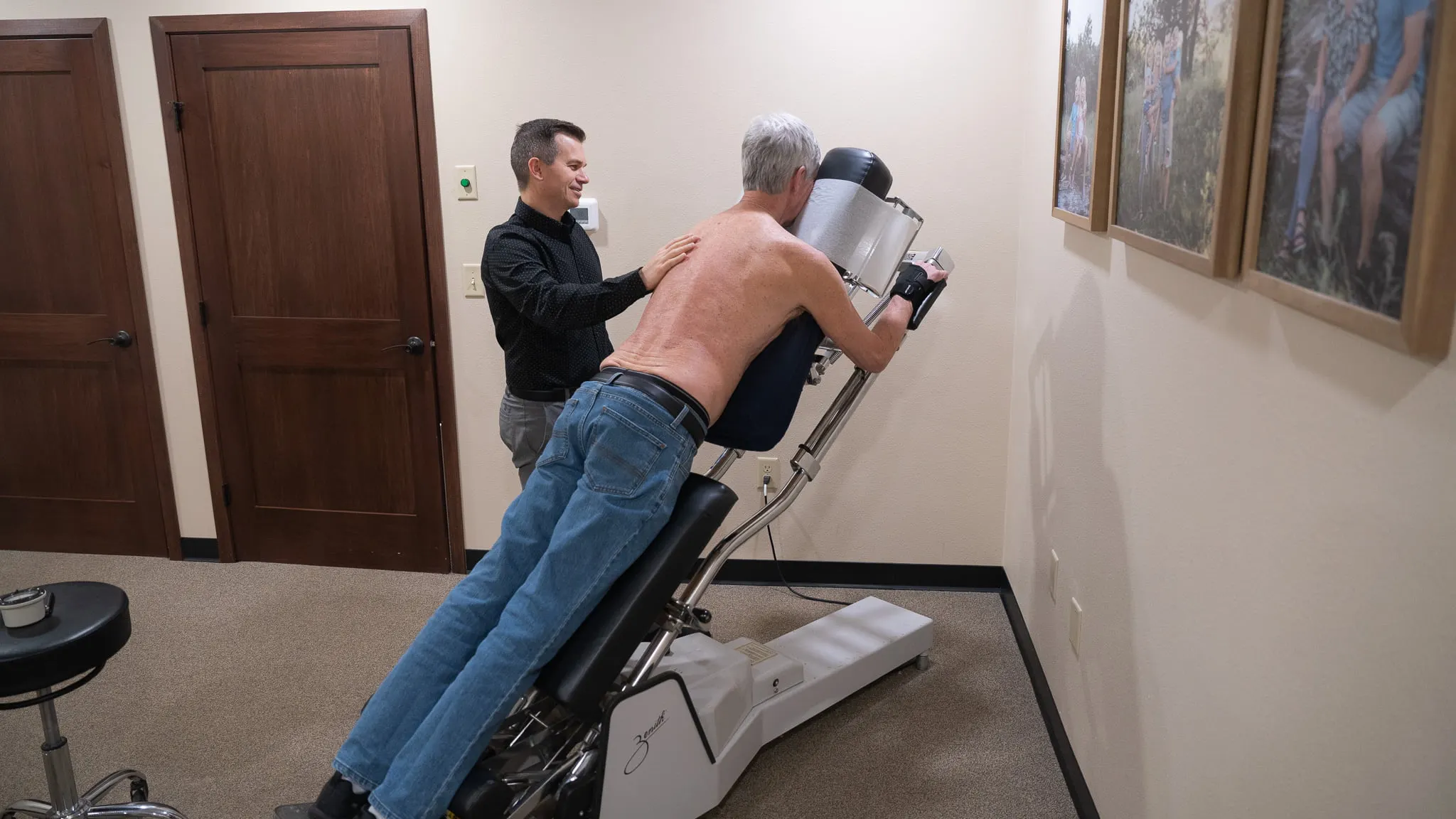
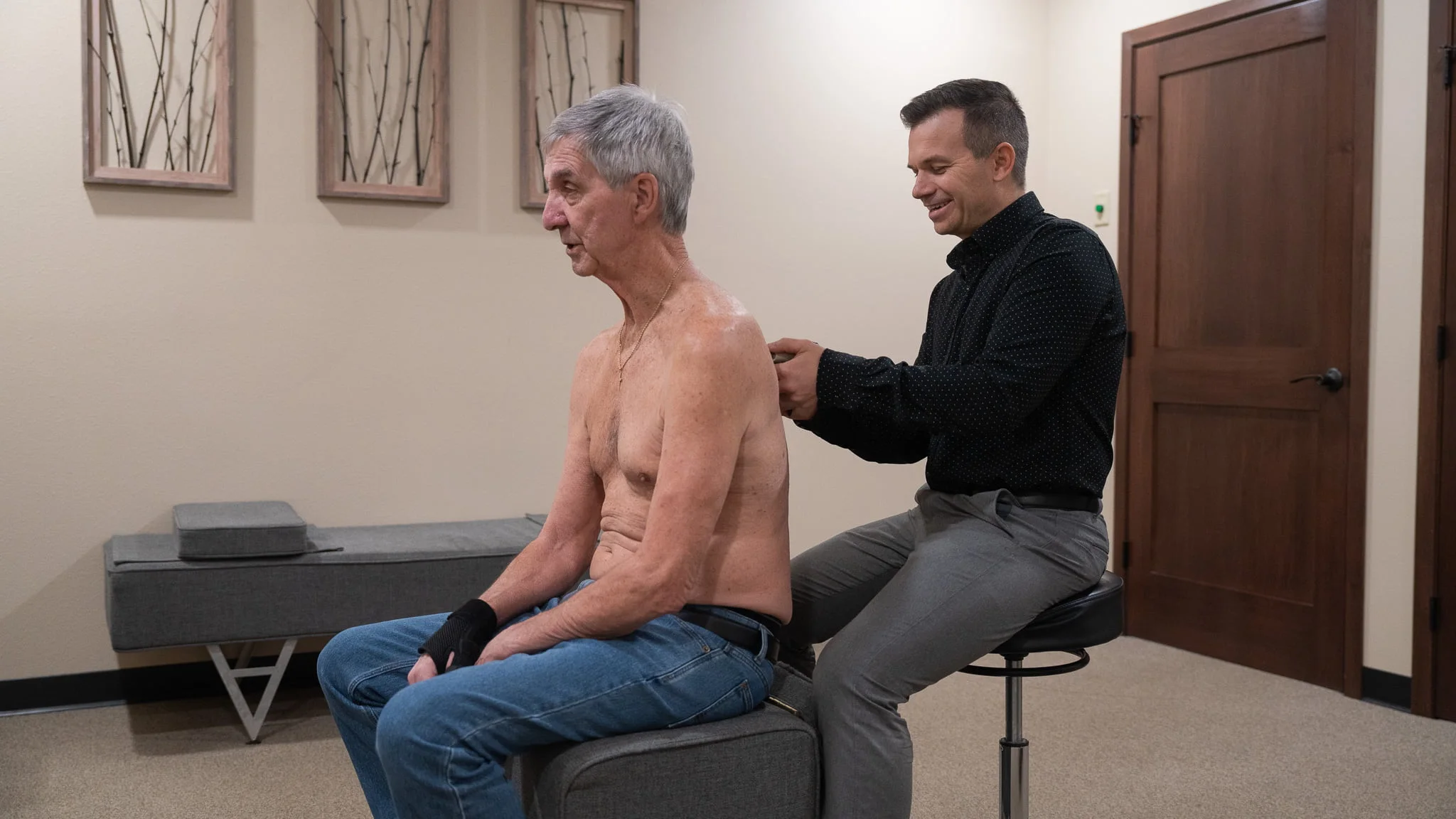
The Gonstead method used at Leading Edge identifies the specific segments that have shifted out of alignment and restores them with targeted adjustments. Once the spine is moving correctly again, the ergonomic improvements actually have a healthy structure to maintain.
Simple Habits That Help Between Visits
Chiropractic care corrects the structural side. A few consistent daily habits reduce how fast problems rebuild between visits.
- Stand up and move for two minutes every 30 to 45 minutes
- Position your monitor so your eyes meet the top third of the screen without dropping your chin
- Sit with your hips slightly higher than your knees to preserve the lumbar curve
- Keep your phone at eye level when reading instead of dropping your head
- Do a simple chin tuck exercise several times a day to counter forward head posture
None of these replace chiropractic care for a spine that is already symptomatic. But they slow the rate of accumulation and help adjustments hold longer between visits.
Frequently Asked Questions
How long before I notice improvement?
Most desk workers in the La Crosse area notice improvement within the first few visits once care begins. The spine has been absorbing stress for a long time, so full correction takes consistent care, but the trajectory generally points in the right direction early on.
Do I need to stop working at a desk?
No. The goal is to correct the structural damage that has accumulated and build habits that slow the rate of future accumulation. Most patients continue their normal work routine throughout care.
Your Job Should Not Determine Your Pain Level
Desk work is not going away for most people in the Holmen area. But chronic pain by mid-afternoon is not an inevitable part of it. Contact Leading Edge Chiropractic or call 608-526-2854 to schedule an evaluation with Dr. Chad or Dr. Katie and find out what your spine actually needs.

Leading Edge Chiropractic serves Holmen, WI and the surrounding La Crosse area with precise, results-driven chiropractic care. Dr. Chad Updike and Dr. Katie Canar are both extensively trained in the Gonstead method, bringing a level of specificity and thoroughness to every patient that goes well beyond a standard adjustment. Dr. Chad serves as Team Chiropractor for the Holmen High School football team and has spent a decade on the board of the Chiropractic Society of Wisconsin, including two years as President. Dr. Katie graduated summa cum laude from Palmer College of Chiropractic, holds Webster Certification for prenatal care, and has completed hundreds of hours of advanced Gonstead training. Together they care for patients of all ages, from infants and student-athletes to active adults and seniors. If you’re ready to find out what’s actually driving your symptoms, contact Leading Edge Chiropractic today.