Table of Contents
Having a baby is one of the most physically demanding things a body goes through, and the recovery does not end when you leave the hospital. The weeks and months after delivery involve significant physical demands on a spine and pelvis that are still in a state of change. Many new moms in the Holmen area push through postpartum pain and exhaustion assuming it is just part of the process. Some of it is. But a lot of it does not have to last as long as it does. Dr. Katie Canar at Leading Edge Chiropractic understands this transition deeply, both professionally and personally, and she works with postpartum moms to support a real, complete recovery.
What Happens to the Body After Birth
During pregnancy, the hormone relaxin loosens the ligaments throughout the pelvis to prepare for delivery. That process does not reverse overnight after the baby arrives. Relaxin levels remain elevated during breastfeeding, which means the joints of the pelvis and lower back stay more mobile and less stable than usual for months after delivery.
The physical demands of new motherhood layer on top of that instability. Nursing posture, carrying a growing baby, loading and unloading a car seat, bending over a crib repeatedly, and getting up from the floor dozens of times a day all place asymmetrical stress on a spine and pelvis that are not yet fully stabilized. It is a recipe for misalignment, and most new moms experience the consequences without knowing what is driving them.
Then there is the delivery itself. Whether vaginal or cesarean, birth places significant stress on the pelvis, sacrum, and lower spine. The body does a remarkable job of recovering, but it often needs support to do it well.
Common Postpartum Complaints That Chiropractic Addresses
Dr. Katie sees a consistent set of complaints in postpartum patients at Leading Edge Chiropractic. Many of these are dismissed as normal parts of new motherhood when they are actually signs of structural issues that respond well to chiropractic care.
- Lower back pain that persists or worsens after delivery
- Pelvic pain or instability, including sacroiliac joint dysfunction
- Neck and upper back pain from nursing and carrying posture
- Headaches driven by cervical tension and poor head position during feeding
- Hip pain and tightness that lingers after pregnancy
- General fatigue and difficulty feeling settled in the body
- Numbness or tingling in the arms from prolonged nursing positions
Some of these symptoms improve on their own as the body recovers. Others do not, because the underlying misalignments driving them are still present. Getting evaluated gives you a clear picture of what is structural and what can be corrected.
Why Nursing Posture Deserves Attention
Breastfeeding is wonderful for babies and hard on maternal spines. Most new moms spend hours each day in a rounded forward posture, head dropped, shoulders curled in, supporting a baby’s weight across the arms and chest. Repeated over many feeding sessions across many months, this posture places significant stress on the cervical and thoracic spine.
Neck pain and upper back tightness are extremely common among breastfeeding mothers. The good news is that both respond well to chiropractic adjustments that restore proper cervical and thoracic alignment. Dr. Katie also provides guidance on positioning adjustments and simple postural habits that reduce the strain during feeding sessions.
C-Section Recovery and Chiropractic
Cesarean delivery is major abdominal surgery, and recovery involves more than the incision healing. The muscles and connective tissue of the core and pelvis are affected in ways that alter how the lower back is supported. Many C-section moms develop lower back and pelvic pain in the weeks following delivery as the body tries to compensate for core disruption.
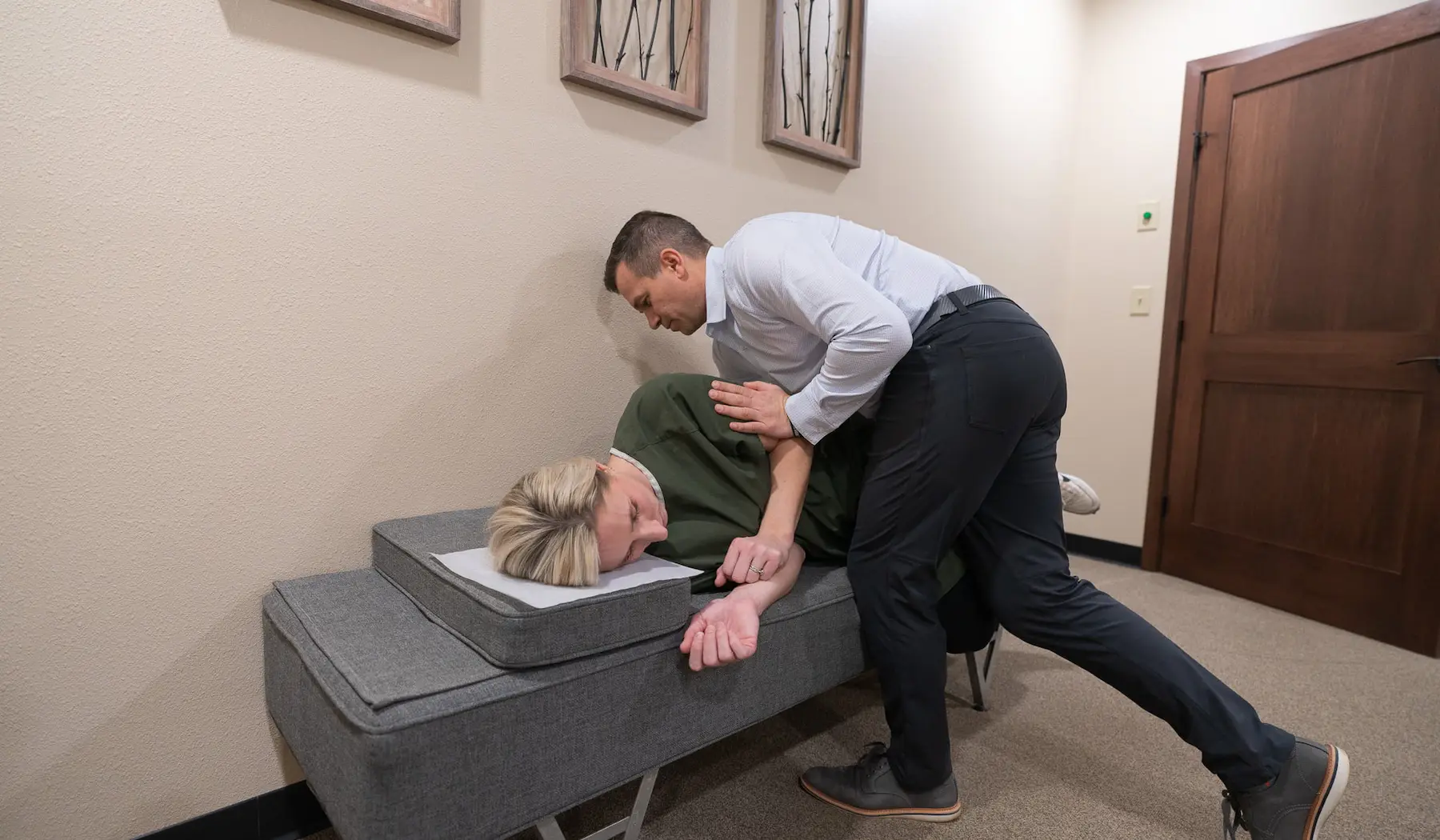
Chiropractic care for postpartum C-section recovery is gentle and appropriate once the incision site has healed and a patient has been cleared by her OB for physical activity. Dr. Katie works within that framework and adapts her approach to avoid any pressure or stress near the surgical area while still addressing the spinal and pelvic misalignments driving the pain.
The Mental and Emotional Side of Recovery
Dr. Katie talks about this openly with her patients. The nervous system does not separate physical recovery from emotional recovery. New motherhood brings sleep deprivation, hormonal shifts, identity changes, and constant demands that keep the nervous system in a state of high alert. That chronic sympathetic activation makes it harder for the body to recover, harder to sleep even when rest is available, and harder to feel calm and grounded.
Chiropractic adjustments that restore spinal alignment and reduce nervous system interference support the body’s ability to shift into the parasympathetic state where healing and recovery actually happen. Many postpartum patients at Leading Edge describe feeling more like themselves after starting chiropractic care, not just physically, but in terms of their overall sense of calm and capacity. That is exactly what Dr. Katie works toward with every patient she sees.
What About Bringing the Baby?
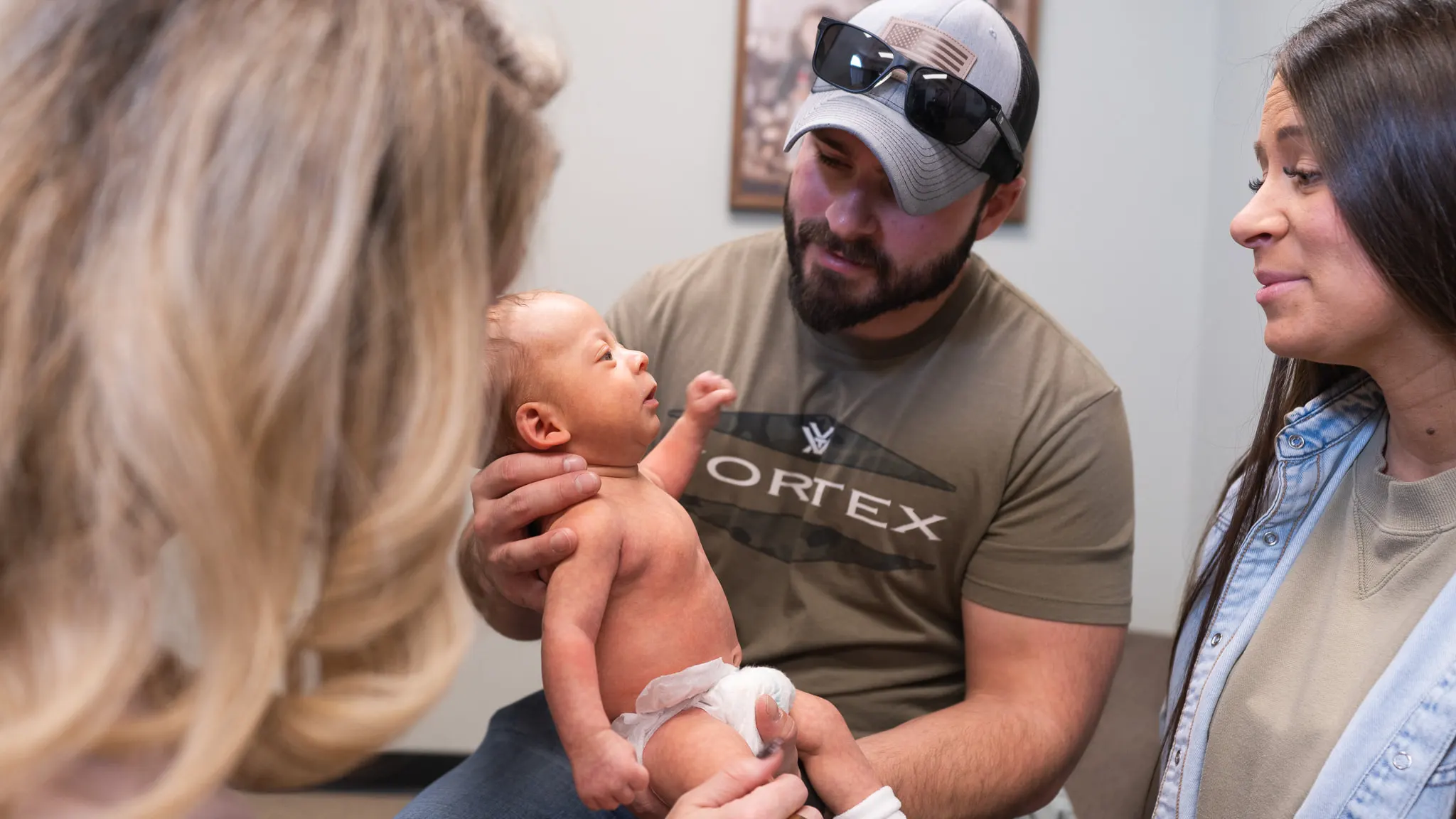
You do not need childcare to come to Leading Edge Chiropractic. Babies are welcome, and Dr. Katie is very familiar with the logistics of a visit with a newborn in tow. Many postpartum patients bring their infants and have the baby evaluated as well during the same appointment.
Infant evaluations are gentle and brief. The birthing process can place stress on an infant’s upper cervical spine regardless of how smooth the delivery appeared. A simple evaluation in the early weeks can identify and correct minor misalignments before they affect feeding, sleep, or general comfort for the baby.
When Should You Schedule Your Postpartum Visit?
There is no strict timeline, but earlier is generally better. Most postpartum patients are ready for a chiropractic evaluation within the first few weeks after delivery, once the initial recovery from birth has stabilized. C-section patients typically wait until their OB has cleared them for physical activity, usually around six weeks.
If you received prenatal chiropractic care during your pregnancy, continuing into the postpartum period makes it an easy transition. If this would be your first visit to Dr. Katie, the first appointment starts with a full evaluation tailored to where you are in your postpartum recovery.
You Deserve to Feel Like Yourself Again
New motherhood is demanding enough without carrying preventable pain through it. Contact Leading Edge Chiropractic or call 608-526-2854 to schedule your postpartum evaluation with Dr. Katie in Holmen and start your recovery with the support your spine and nervous system actually need.
Leading Edge Chiropractic serves Holmen, WI and the surrounding La Crosse area with precise, results-driven chiropractic care. Dr. Chad Updike and Dr. Katie Canar are both extensively trained in the Gonstead method, bringing a level of specificity and thoroughness to every patient that goes well beyond a standard adjustment. Dr. Chad serves as Team Chiropractor for the Holmen High School football team and has spent a decade on the board of the Chiropractic Society of Wisconsin, including two years as President. Dr. Katie graduated summa cum laude from Palmer College of Chiropractic, holds Webster Certification for prenatal care, and has completed hundreds of hours of advanced Gonstead training. Together they care for patients of all ages, from infants and student-athletes to active adults and seniors. If you’re ready to find out what’s actually driving your symptoms, contact Leading Edge Chiropractic today.