Table of Contents
Running is one of the most popular activities in the La Crosse area, and it puts a predictable set of structural demands on the spine that most runners never think about until something hurts. At Leading Edge Chiropractic in Holmen WI, Dr. Chad Updike works with runners at every level, from casual trail runners to competitive athletes, and the structural patterns he sees are consistent. Understanding them is the first step toward staying healthy and running longer.
What Running Does to the Spine
Every running stride sends an impact force up through the foot, ankle, knee, hip, and into the spine. At a comfortable pace, that force is roughly two to three times your body weight with each foot strike. Over the course of a typical run, that adds up to thousands of repetitive compressive loads through the lumbar spine and pelvis.
For a spine that is properly aligned and moving symmetrically, this is manageable. The natural curves of the spine act as a spring, distributing impact efficiently. But when misalignments are present, that impact distributes unevenly. Certain segments take on far more load than others, and over the miles, those areas break down.
This is why running injuries so often feel like they came out of nowhere. The structural vulnerability was building quietly long before the pain showed up.
The Most Common Structural Problems Runners Develop
After working with runners throughout the Holmen area, Dr. Chad sees a consistent set of structural patterns that drive the most common running complaints.
Pelvic Asymmetry
The pelvis is the foundation of the running stride. When it is level and moving symmetrically, force distributes evenly through both legs and up through the spine. When one side sits higher or rotates differently than the other, every stride loads one side more than the other. That asymmetry is one of the primary drivers of IT band problems, hip pain, and lower back pain in runners. Most runners have no idea their pelvis is off until it is assessed.
Lumbar Compression
The lower lumbar segments take the most direct compressive load during running. When those segments are already stressed from poor mechanics or previous injury, the accumulated impact of regular training pushes them toward pain faster. Runners who describe lower back pain that builds through a run and persists afterward almost always have lumbar involvement that needs to be addressed structurally.
Sacroiliac Joint Stress
The sacroiliac joints transmit force between the spine and the pelvis on every stride. When they are moving asymmetrically or are locked in an abnormal position, they produce pain in the lower back, buttock, and hip that is often mistaken for a muscle problem. Runners who have been stretching and foam rolling the same area for months without relief frequently have a sacroiliac component that stretching alone cannot fix.
Hip and Lower Extremity Compensation
The spine and hips work as a system during running. Restrictions in hip mobility force the lumbar spine to compensate with extra movement, increasing the load on those segments. Tight hip flexors from prolonged sitting, which many runners also do at a desk all day, pull the pelvis into an anterior tilt that flattens the lumbar curve and changes how force distributes through the lower back during each stride.
Why Runners Often Wait Too Long to Seek Care
Runners are a tough, self-sufficient group. The default response to pain is to back off the mileage, add more stretching, try a different shoe, or push through. Some of those strategies help short term. None of them correct the structural misalignments that create the vulnerability in the first place.
By the time most runners come to Leading Edge Chiropractic, the problem has been building for months. What started as mild tightness after long runs has become pain during every run, or pain that is now affecting daily life off the road. Getting evaluated earlier consistently leads to faster resolution and less time away from training.
How Chiropractic Helps Runners Specifically
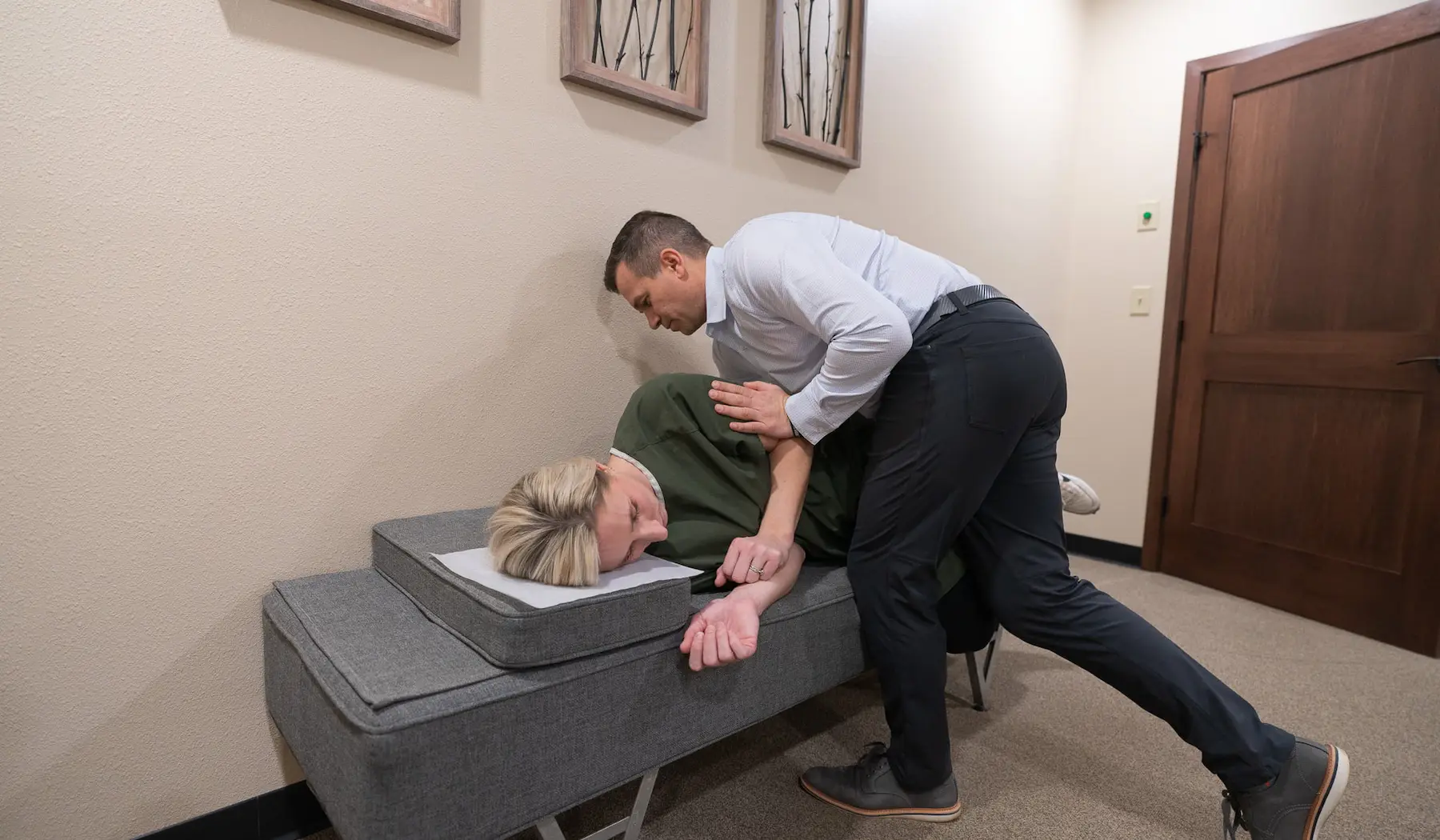
The Gonstead analysis identifies exactly where asymmetry and misalignment are present in the lumbar spine, pelvis, and sacroiliac joints. Targeted adjustments restore proper mechanics to those specific areas, which changes how impact distributes through the spine on every stride.
Many runners notice a difference in how their body feels on a run within the first few weeks of care. Stiffness that was present at the start of every run begins to clear faster. The hip or back tightness that used to build through the miles becomes less pronounced. That is the result of the spine distributing load the way it is supposed to rather than compensating around areas that are not moving correctly.
Chiropractic as Part of a Training Plan
The runners who get the most out of chiropractic care are the ones who make it part of their regular training routine rather than something they do only when injured. Regular spinal maintenance during training keeps the small misalignments that accumulate from weekly mileage from building into significant problems.
Dr. Chad works with runners’ training schedules rather than against them. The goal is to keep athletes healthy and running, not to put them on the sidelines for extended rest periods. Care recommendations account for where a runner is in their training cycle and what is coming up on their race calendar.
Frequently Asked Questions
Should I stop running while getting chiropractic care?
In most cases no. Dr. Chad will give specific guidance based on what the evaluation finds. Acute injuries may require a short modification period, but most structural issues can be addressed while continuing to train at a reduced or modified level. The goal is to keep you running, not bench you.
Can chiropractic help with knee pain from running?
Often yes. Many running-related knee problems originate from pelvic asymmetry, hip restriction, or lumbar misalignment that alters mechanics through the entire lower extremity. Correcting the structural source frequently resolves knee symptoms that have not responded to knee-focused treatment alone.
Keep Running Without Breaking Down
If running has been producing pain that stretching and rest are not fixing, the structural side of the problem deserves attention. Contact Leading Edge Chiropractic or call 608-526-2854 to schedule an evaluation with Dr. Chad in Holmen and find out what your spine needs to keep up with your training.

Leading Edge Chiropractic serves Holmen, WI and the surrounding La Crosse area with precise, results-driven chiropractic care. Dr. Chad Updike and Dr. Katie Canar are both extensively trained in the Gonstead method, bringing a level of specificity and thoroughness to every patient that goes well beyond a standard adjustment. Dr. Chad serves as Team Chiropractor for the Holmen High School football team and has spent a decade on the board of the Chiropractic Society of Wisconsin, including two years as President. Dr. Katie graduated summa cum laude from Palmer College of Chiropractic, holds Webster Certification for prenatal care, and has completed hundreds of hours of advanced Gonstead training. Together they care for patients of all ages, from infants and student-athletes to active adults and seniors. If you’re ready to find out what’s actually driving your symptoms, contact Leading Edge Chiropractic today.