Table of Contents
Dr. Katie Canar has spent years watching what gymnastics does to young bodies, first as an athlete, then as a coach, and now as President of the Board for Blue Angels Gymnastics Club in the Holmen area. When gymnast patients come to Leading Edge Chiropractic, she brings both her clinical training and her coaching experience to every evaluation. What she finds in young gymnasts’ spines is consistent and very treatable when it is caught early enough.
Why Gymnastics Is Uniquely Hard on the Spine
Most sports stress the spine in one primary direction. Gymnastics does it in every direction simultaneously. Back walkovers, bridges, tumbling passes, and back handsprings place the lumbar spine into extreme repeated extension. Dismounts and landing drills create compressive impact with every rep. Beam and bar work demands strength and control through ranges of motion most bodies are not naturally built for.
Because gymnastics training starts young, often between ages four and eight, these stresses hit spines that are still developing. That is not a reason to avoid the sport. It is a reason to pay attention to spinal health during the years when the body is most responsive to correction.
Dr. Katie is not here to discourage gymnastics. She loves the sport and is actively involved in the local gymnastics community. What she is saying is that gymnasts need the same level of structural attention that any high-demand athlete deserves, and most of them are not getting it.
What Dr. Katie Commonly Finds in Young Gymnast Patients
After evaluating many gymnast patients at Leading Edge Chiropractic, Dr. Katie sees consistent structural patterns that are directly connected to the demands of the sport.
Lumbar Stress From Repeated Extension
Repeated extreme lumbar extension in young gymnasts creates significant stress on the posterior elements of the lower spine. In some cases this leads to spondylolysis, a stress fracture that develops gradually from repetitive loading. It is one of the most common overuse injuries in gymnastics and is frequently missed because the early presentation is just lower back pain that athletes and parents assume will resolve on its own.
Identifying abnormal lumbar loading patterns early and addressing them with chiropractic care reduces the mechanical stress before it reaches the point of injury. That is where the biggest difference is made.
Upper Cervical Misalignment From Tumbling
The cervical spine takes impact during tumbling, landing, and any skill involving the head and neck under load. Dr. Katie regularly finds upper cervical misalignments in gymnasts that are contributing to headaches, neck stiffness, and in some cases dizziness. Most of these athletes had no specific injury that explained the findings. The misalignments accumulated quietly over training.
Growth-Related Postural Changes
Young gymnasts going through growth spurts face a specific challenge. Bones grow faster than muscles during growth spurts, creating temporary tightness throughout the body. In a sport demanding extreme flexibility and precise body control, that tightness shifts movement patterns and increases injury risk. Regular spinal evaluation during growth periods helps Dr. Katie identify when structural changes from growth are affecting how a gymnast moves.
The Difference Between Pain and a Problem
One of the most important things Dr. Katie communicates to gymnastics families is that the absence of pain does not mean the spine is fine. Young athletes are motivated, tough, and do not want to miss training. Many gymnasts are walking around with significant spinal misalignments that have never produced enough pain to prompt anyone to seek care.
By the time pain becomes the presenting complaint, the underlying issue has often been developing for months. Getting gymnasts evaluated proactively, especially during periods of heavy training or rapid growth, catches problems early when they are far easier to correct.
How Often Should a Gymnast Be Evaluated
For competitive gymnasts, Dr. Katie recommends at least one evaluation at the start of each training season and again if any new symptom develops. Gymnasts in heavy training blocks benefit from more frequent visits because structural stress accumulates faster during those periods.
For recreational gymnasts, a seasonal evaluation is a sensible starting point. Dr. Katie tailors her recommendations to each child’s training level, age, and what the evaluation actually finds. There is no one-size-fits-all answer.
What an Evaluation Looks Like at Leading Edge
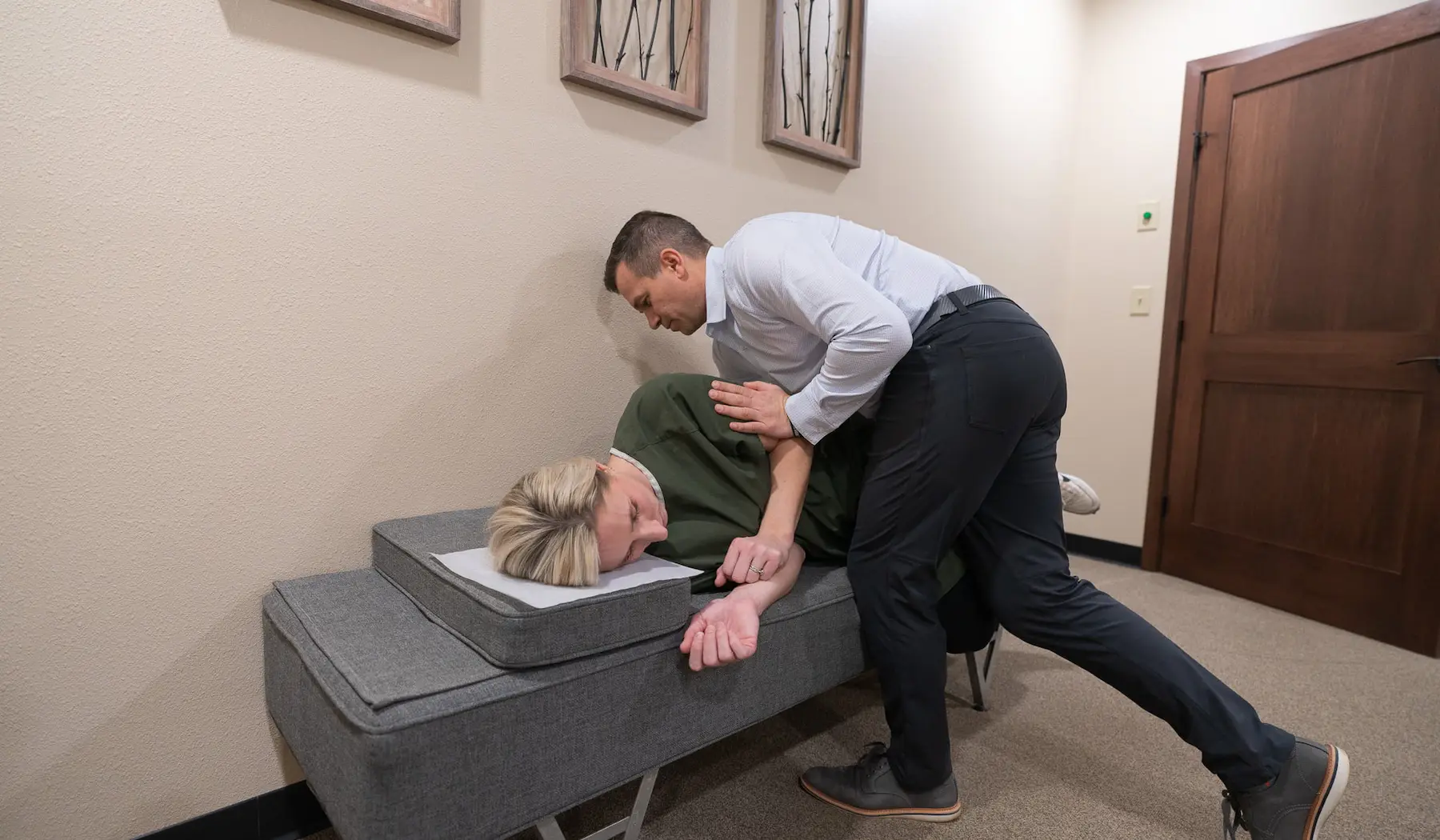
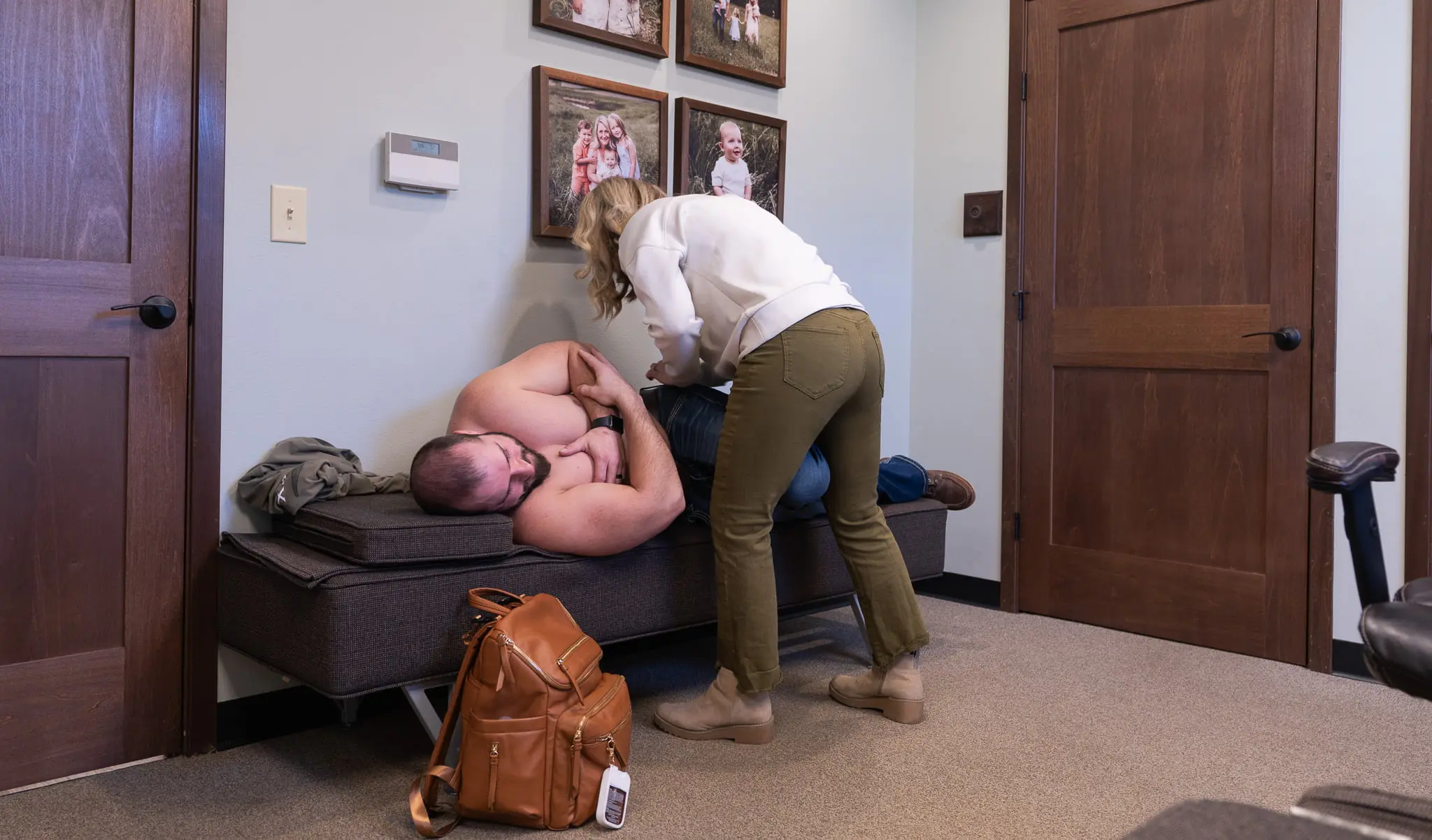
When Dr. Katie evaluates a young gymnast, the Gonstead analysis assesses the full spine with particular attention to the lumbar and cervical regions where gymnasts accumulate the most stress. The assessment is gentle, age-appropriate, and always conducted with a parent present.
Dr. Katie explains her findings in plain language that both parent and child can understand. She connects what she finds clinically to specific training patterns she recognizes from her coaching background. If care is recommended, she outlines what it involves and what the goal is before anything begins. If everything looks good, she says so and provides guidance on what to watch for going forward.
Parents in the La Crosse area consistently tell Dr. Katie that having a chiropractor who actually understands gymnastics makes a real difference in how much they trust the evaluation.
A Note From Dr. Katie
Gymnastics gave me so much growing up and it is a sport I am deeply committed to through my work at Blue Angels. The reason I talk about spinal health with gymnastics families is not to create worry. It is because I have seen what happens when structural problems in young athletes go unaddressed for years, and I know how much better the outcome is when they are caught early. If your gymnast is training hard and their spine has never been evaluated, that is worth changing.
Get Your Young Gymnast Evaluated in Holmen
Whether your child competes or trains recreationally, their spine deserves the same attention as their skills. Contact Leading Edge Chiropractic or call 608-526-2854 to schedule an evaluation with Dr. Katie in Holmen today.
Leading Edge Chiropractic serves Holmen, WI and the surrounding La Crosse area with precise, results-driven chiropractic care. Dr. Chad Updike and Dr. Katie Canar are both extensively trained in the Gonstead method, bringing a level of specificity and thoroughness to every patient that goes well beyond a standard adjustment. Dr. Chad serves as Team Chiropractor for the Holmen High School football team and has spent a decade on the board of the Chiropractic Society of Wisconsin, including two years as President. Dr. Katie graduated summa cum laude from Palmer College of Chiropractic, holds Webster Certification for prenatal care, and has completed hundreds of hours of advanced Gonstead training. Together they care for patients of all ages, from infants and student-athletes to active adults and seniors. If you’re ready to find out what’s actually driving your symptoms, contact Leading Edge Chiropractic today.