Table of Contents
Shoulder pain is one of those problems that patients often try to manage on their own for too long – resting it, icing it, modifying how they move – only to find that the underlying issue keeps reasserting itself. At Leading Edge Chiropractic in Holmen, one of the first things we look at with shoulder pain isn’t just the shoulder. It’s the cervical spine, the upper thoracic spine, and the full mechanical picture that determines why the pain is there and why it hasn’t resolved on its own.
Why Shoulder Pain Is Rarely Just a Shoulder Problem
The shoulder is the most mobile joint in the body, which makes it remarkably capable and remarkably vulnerable at the same time. That range of motion depends on a complex interaction between the joint itself, the surrounding muscles and tendons, and the nerves that control all of it. Those nerves don’t originate in the shoulder – they come from the cervical spine, primarily at the C5, C6, and C7 levels.
When the cervical spine has restriction or misalignment at those levels, the result is often felt in the shoulder. Patients experience pain, weakness, numbness, or tingling that seems to be a shoulder problem but is actually being driven by nerve irritation at the neck. They get their shoulder treated, get some temporary relief, and then it comes back – because the actual source was never addressed.
This is one of the most common patterns we see with chronic shoulder pain. And it’s exactly why evaluating the cervical and upper thoracic spine alongside the shoulder joint isn’t optional – it’s the starting point.
Common Shoulder Conditions We See in Holmen
Rotator cuff strain and tendinopathy are among the most frequent shoulder complaints we evaluate. The four muscles of the rotator cuff are responsible for stabilizing the humeral head in the joint socket during movement, and when any of them are strained, inflamed, or chronically irritated, the result is pain with overhead motion, reaching behind the back, and often at night. Gonstead adjustments to restore normal cervical and shoulder mechanics, combined with Aspen Laser therapy to address the inflammatory component, often produce meaningful improvement where rest and stretching alone have not.
AC joint injuries – the acromioclavicular joint at the top of the shoulder – are particularly common in athletes who play contact sports. A fall onto the shoulder, a tackle, or a direct hit can sprain or separate this joint. Dr. Chad sees AC joint injuries regularly in football players from the Holmen area, and assessment of this structure is part of every sports-related shoulder evaluation.
Shoulder impingement occurs when the tendons of the rotator cuff are compressed during overhead movement, producing a painful arc and limiting how high the arm can be raised comfortably. Postural imbalances in the cervical and thoracic spine often contribute to this – when the upper back rounds and the neck juts forward, the mechanics of the shoulder girdle change in ways that create impingement. Correcting the spinal component frequently changes the shoulder mechanics enough to provide real relief.
Frozen shoulder, or adhesive capsulitis, develops when the joint capsule becomes inflamed and scarred following injury, surgery, or prolonged immobility. It’s gradual, progressive, and significantly limiting. Early intervention is important – the longer the capsule has been restricted, the longer the recovery. Gentle Gonstead work to maintain what joint motion remains, combined with laser therapy to address the inflammatory component, can be a meaningful part of the management approach for frozen shoulder patients.
The Neck-Shoulder Connection in Contact Sports
For athletes – particularly those playing football, wrestling, volleyball, or any other contact or overhead sport – the relationship between the neck and shoulder deserves specific attention.
In football, linemen absorb contact through the shoulder and neck simultaneously on virtually every play. Over the course of a season, this accumulates. The cervical joints become restricted, the surrounding muscles guard and tighten, and the normal nerve flow to the shoulder and arm is compromised. Players often describe it as a general heaviness or tightness in the shoulder that builds through the season – not a discrete injury, just a gradual decline in how the shoulder feels and moves.
This is exactly the type of cumulative mechanical stress that Gonstead chiropractic care is designed to address. By identifying and correcting the specific cervical and upper thoracic levels that are restricted, we restore normal nerve flow to the shoulder and change the mechanical environment the rotator cuff is working in. The shoulder often responds quickly once the spinal component is addressed.
There’s also a concussion connection worth noting here. When a player takes a significant hit to the head or neck, the force involved frequently affects both the cervical spine and the shoulder simultaneously. An athlete who comes in for concussion evaluation often has shoulder restriction that is part of the same injury event, and vice versa. Evaluating the full picture – head, neck, and shoulder together – gives a more accurate picture of what the impact actually did to the body.
How the Gonstead Approach Evaluates Shoulder Pain
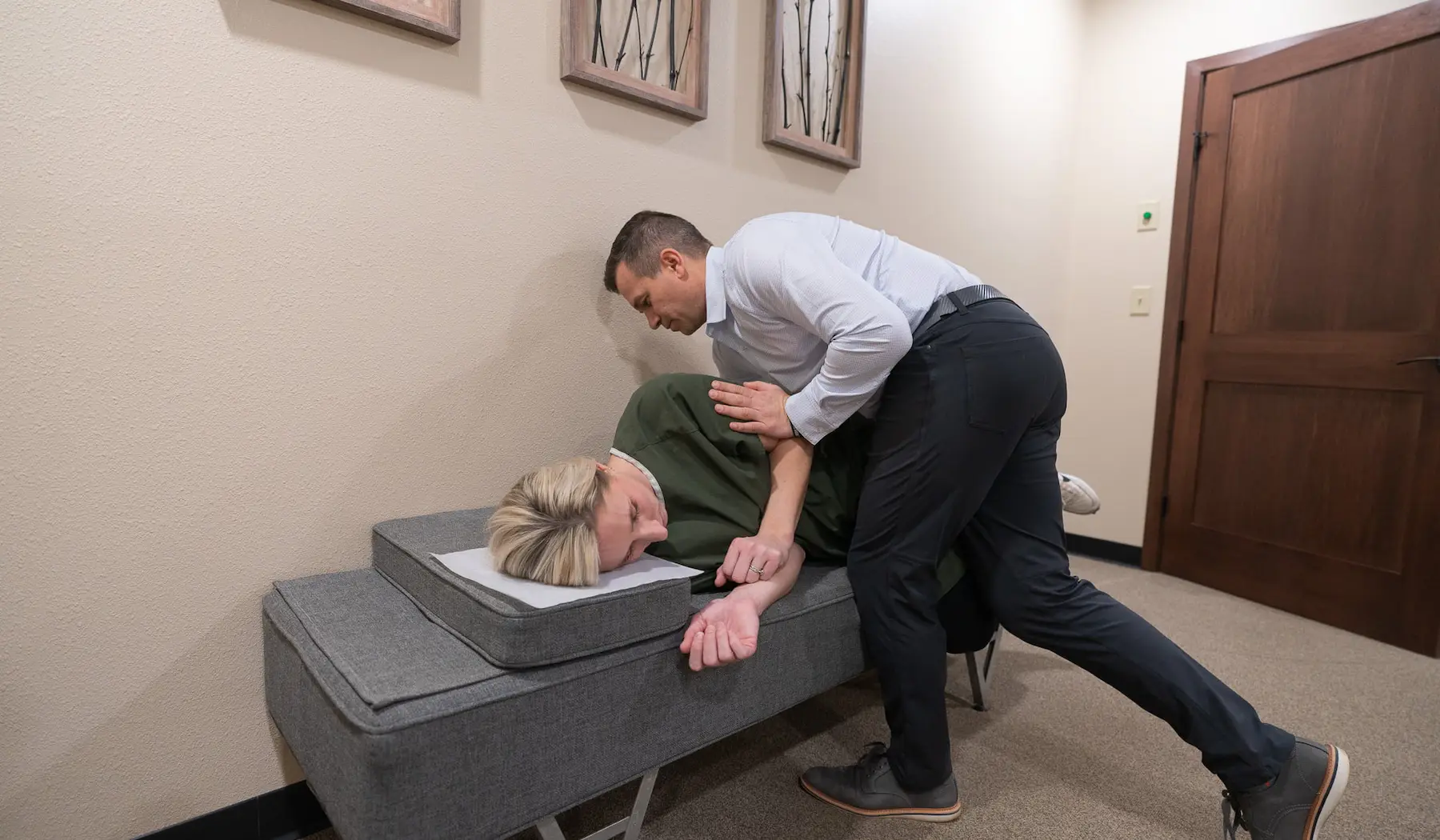
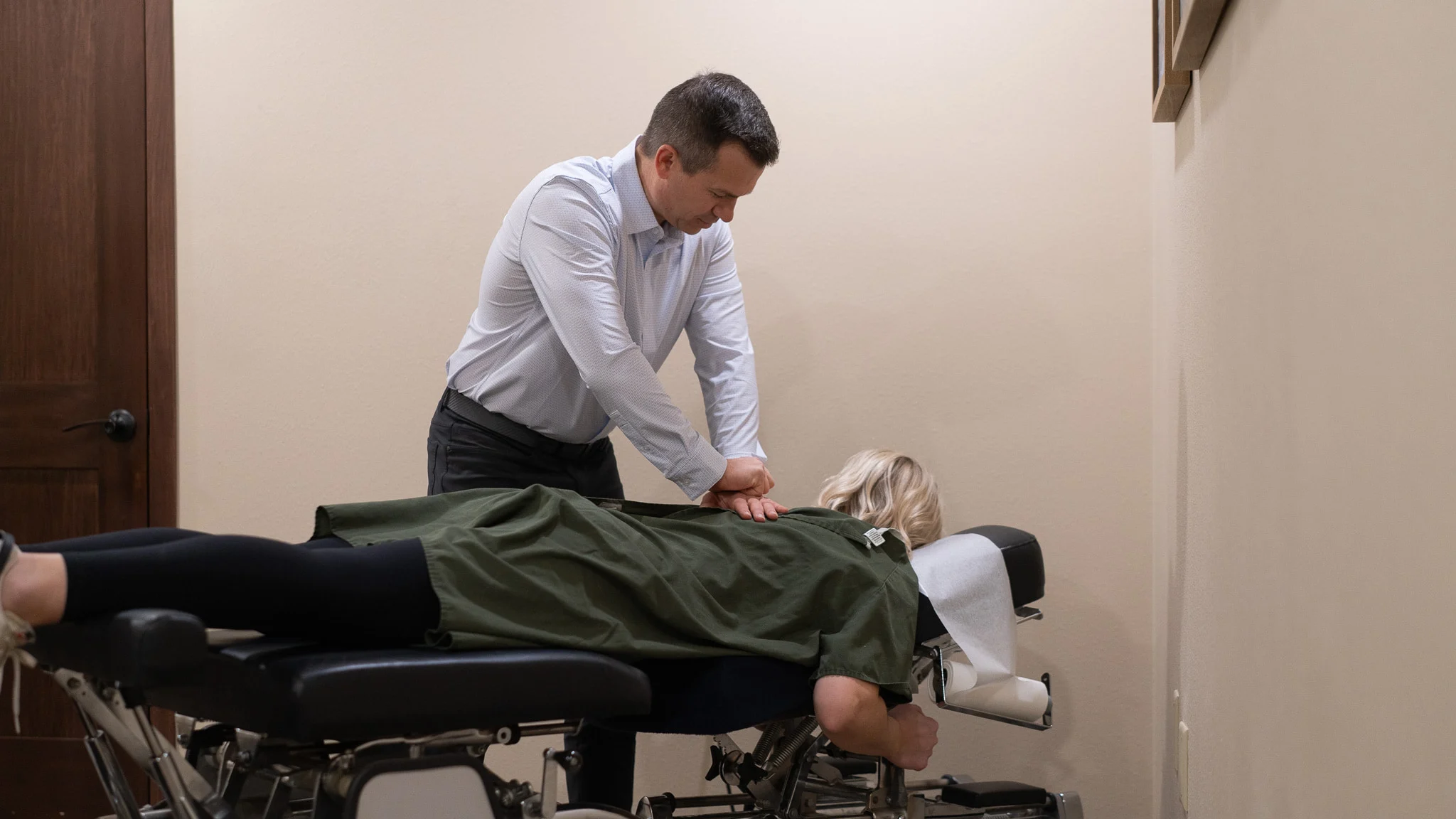
A Gonstead shoulder evaluation at Leading Edge starts with understanding the full history – when it started, what makes it better or worse, whether there was a specific incident or if it built gradually, and what positions or activities provoke symptoms. From there, the assessment includes range of motion testing in the shoulder, orthopedic testing specific to the structures most likely involved (rotator cuff, AC joint, bicep tendon, labrum), and thorough assessment of the cervical and upper thoracic spine.
The nervoscope – one of the tools used in Gonstead analysis – detects uneven heat patterns along the spine that indicate nerve irritation at specific levels. For shoulder pain patients, this often reveals restriction at C5, C6, or the upper thoracic spine that correlates directly with the shoulder symptoms. Identifying that connection is what allows care to address the actual source rather than just the painful area.
When imaging is clinically appropriate – for example, when there’s a history of significant trauma or symptoms suggesting labral or rotator cuff tear – we’ll discuss what additional evaluation makes sense before proceeding with care.
Laser Therapy for Shoulder Pain and Recovery
The Aspen Laser Apex is one of our most effective tools for shoulder conditions that have a significant soft tissue or inflammatory component. For rotator cuff tendinopathy, impingement, and post-injury shoulder inflammation, the laser delivers targeted light energy into the affected tissue to stimulate cellular repair, reduce inflammation, and improve circulation to an area that is often chronically underhealed.
One of the frustrating things about rotator cuff tendons specifically is that their blood supply is limited – particularly in the area of the supraspinatus tendon where most injuries occur. Limited blood supply means limited healing capacity. Laser therapy directly addresses this by improving circulation and cellular energy production in the tissue, effectively jumpstarting a healing response in tissue that has been struggling to repair itself.
For athletes managing shoulder injuries in-season, the combination of Gonstead adjustments and laser therapy often allows continued participation at a level that wouldn’t be possible with rest alone – while still actively moving the injury toward resolution rather than just managing symptoms.
Who Gets Shoulder Pain in the Holmen Area
The shoulder pain patients we see most often fall into a few recognizable patterns. Athletes – particularly baseball players, volleyball players, swimmers, and football players – dealing with overuse or contact-related injuries. Desk workers and people who spend long hours in forward-flexed positions developing the postural patterns that lead to impingement and upper back tightness. Patients 40 and older experiencing the gradual onset of rotator cuff degeneration that comes with age and accumulated wear. And workers in physically demanding jobs – trades, agriculture, manufacturing – whose shoulders absorb repetitive stress that eventually exceeds the tissue’s ability to recover.
Each of these presentations looks a little different and responds to a slightly different approach. The common thread is that all of them benefit from a thorough evaluation that looks at the shoulder and the spine together rather than treating the painful area in isolation.
Frequently Asked Questions About Shoulder Pain
Can chiropractic help with shoulder pain even if my neck doesn’t hurt?
Yes – and this is one of the most important points to understand about shoulder care. The cervical spine can be restricted and contributing to shoulder symptoms without producing noticeable neck pain. The nerve irritation is present; it’s just expressing itself at the shoulder rather than the neck. Assessment of the cervical spine is part of every shoulder evaluation regardless of whether neck pain is present.
How do I know if my shoulder pain needs surgery?
Full-thickness rotator cuff tears, significant labral tears, and certain AC joint injuries may eventually require surgical intervention. Dr. Chad and Dr. Katie will be straightforward about what they find and whether conservative care is appropriate for your situation. If imaging reveals something that warrants orthopedic consultation, we’ll tell you directly.
Is it safe to get adjusted when my shoulder is really painful?
Yes. Care is always calibrated to what your shoulder can handle at the current stage. In the acute phase of an injury, the approach is gentler and more focused on reducing inflammation and restoring gentle motion. As the shoulder improves, care can progress accordingly.
How long does shoulder pain take to resolve with chiropractic?
It depends significantly on how long the problem has been present and what’s causing it. Acute injuries often respond within a handful of visits. Chronic tendon problems or long-standing impingement that has created structural changes take longer – typically a multi-week protocol. Dr. Chad or Dr. Katie will give you an honest timeline after your evaluation.
If you’re dealing with shoulder pain in the Holmen area and want to find out what’s actually driving it, we’d love to take a look. Contact Leading Edge Chiropractic or call 608-526-2854 to schedule your evaluation.
Leading Edge Chiropractic serves Holmen, WI and the surrounding La Crosse area with precise, results-driven chiropractic care. Dr. Chad Updike and Dr. Katie Canar are both extensively trained in the Gonstead method, bringing a level of specificity and thoroughness to every patient that goes well beyond a standard adjustment. Dr. Chad serves as Team Chiropractor for the Holmen High School football team and has spent a decade on the board of the Chiropractic Society of Wisconsin, including two years as President. Dr. Katie graduated summa cum laude from Palmer College of Chiropractic, holds Webster Certification for prenatal care, and has completed hundreds of hours of advanced Gonstead training. Together they care for patients of all ages, from infants and student-athletes to active adults and seniors. If you’re ready to find out what’s actually driving your symptoms, contact Leading Edge Chiropractic today.
Leading Edge Chiropractic serves Holmen, WI and the surrounding La Crosse area with precise, results-driven chiropractic care. Dr. Chad Updike and Dr. Katie Canar are both extensively trained in the Gonstead method, bringing a level of specificity and thoroughness to every patient that goes well beyond a standard adjustment. Dr. Chad serves as Team Chiropractor for the Holmen High School football team and has spent a decade on the board of the Chiropractic Society of Wisconsin, including two years as President. Dr. Katie graduated summa cum laude from Palmer College of Chiropractic, holds Webster Certification for prenatal care, and has completed hundreds of hours of advanced Gonstead training. Together they care for patients of all ages, from infants and student-athletes to active adults and seniors. If you’re ready to find out what’s actually driving your symptoms, contact Leading Edge Chiropractic today.