Table of Contents
A sprain or strain might not sound like a serious injury, but anyone who has dealt with one knows it can sideline you for weeks and linger far longer than it should. The reason most soft tissue injuries take so long to heal is not just tissue damage. It is that the surrounding joints, alignment, and mechanics are often affected too, and rest alone does nothing to correct those. At Leading Edge Chiropractic in Holmen, Dr. Chad Updike combines precise chiropractic care with laser therapy to address both sides of the problem and get patients back to full function faster.
What Is the Difference Between a Sprain and a Strain?
The two terms are often used interchangeably, but they refer to different tissue types. A sprain is an injury to a ligament, the fibrous tissue that connects bone to bone. A strain is an injury to a muscle or tendon, the tissue that connects muscle to bone. Both involve overstretching or tearing of fibers, and both produce pain, swelling, and reduced function.
Sprains commonly occur in the ankle, knee, wrist, and the joints of the spine. Strains are frequent in the lower back, hamstrings, neck, and shoulders. In practice, many injuries involve both, particularly in the spine where ligaments and muscles work together to stabilize each segment.
The severity of either injury ranges from a mild stretch with minimal tearing to a complete rupture. Most cases seen at Leading Edge fall somewhere in the mild to moderate range, and those respond very well to the combined approach Dr. Chad uses.
Why Rest Alone Often Isn’t Enough
Rest is appropriate in the acute phase of a soft tissue injury. Keeping load off a fresh sprain for the first day or two makes sense. But prolonged rest beyond that initial window often slows recovery rather than helping it.
Here is why. When a ligament or muscle is injured, the surrounding joints frequently lose their normal alignment and movement as a result. The body guards the injured area by tightening the surrounding muscles, which further restricts motion and creates compensatory patterns that can become problems of their own. Rest does not correct any of that. It just leaves those issues sitting there while the tissue tries to heal around them.
Scar tissue also forms during the healing process. Without proper joint motion and guided tissue loading, that scar tissue tends to form in a disorganized pattern that reduces strength and flexibility in the healed tissue. This is one of the main reasons old sprains and strains seem to keep coming back in the same spot.
How Chiropractic Addresses Soft Tissue Injuries
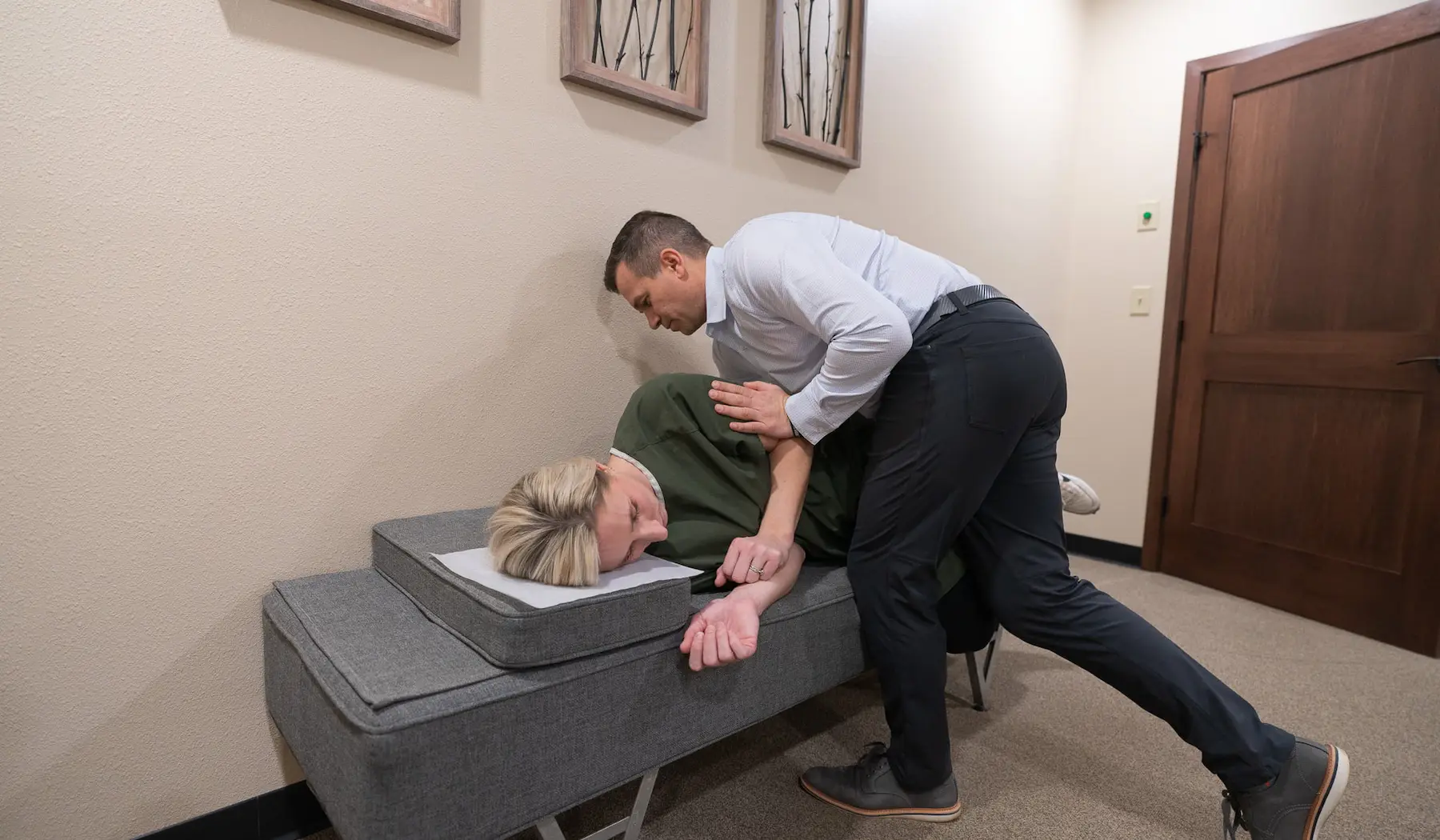
The chiropractic side of treatment focuses on the joints. When a sprain or strain occurs in or near the spine, the affected segments often lose proper alignment and motion. Dr. Chad uses the Gonstead method to identify exactly which joints have been affected and restore normal mechanics with targeted adjustments.
For extremity injuries like ankle sprains or wrist sprains, the evaluation extends beyond just the injured joint. An ankle sprain, for example, often affects alignment through the foot, knee, hip, and even the lower back as the body compensates for the injury. A complete recovery addresses all of those areas, not just the ankle itself.
Restoring proper joint mechanics during the healing phase encourages more organized scar tissue formation and reduces the chronic instability that leads to repeat injuries. Patients who receive chiropractic care alongside their soft tissue rehabilitation consistently recover more completely than those who rest and wait.
Where Laser Therapy Comes In
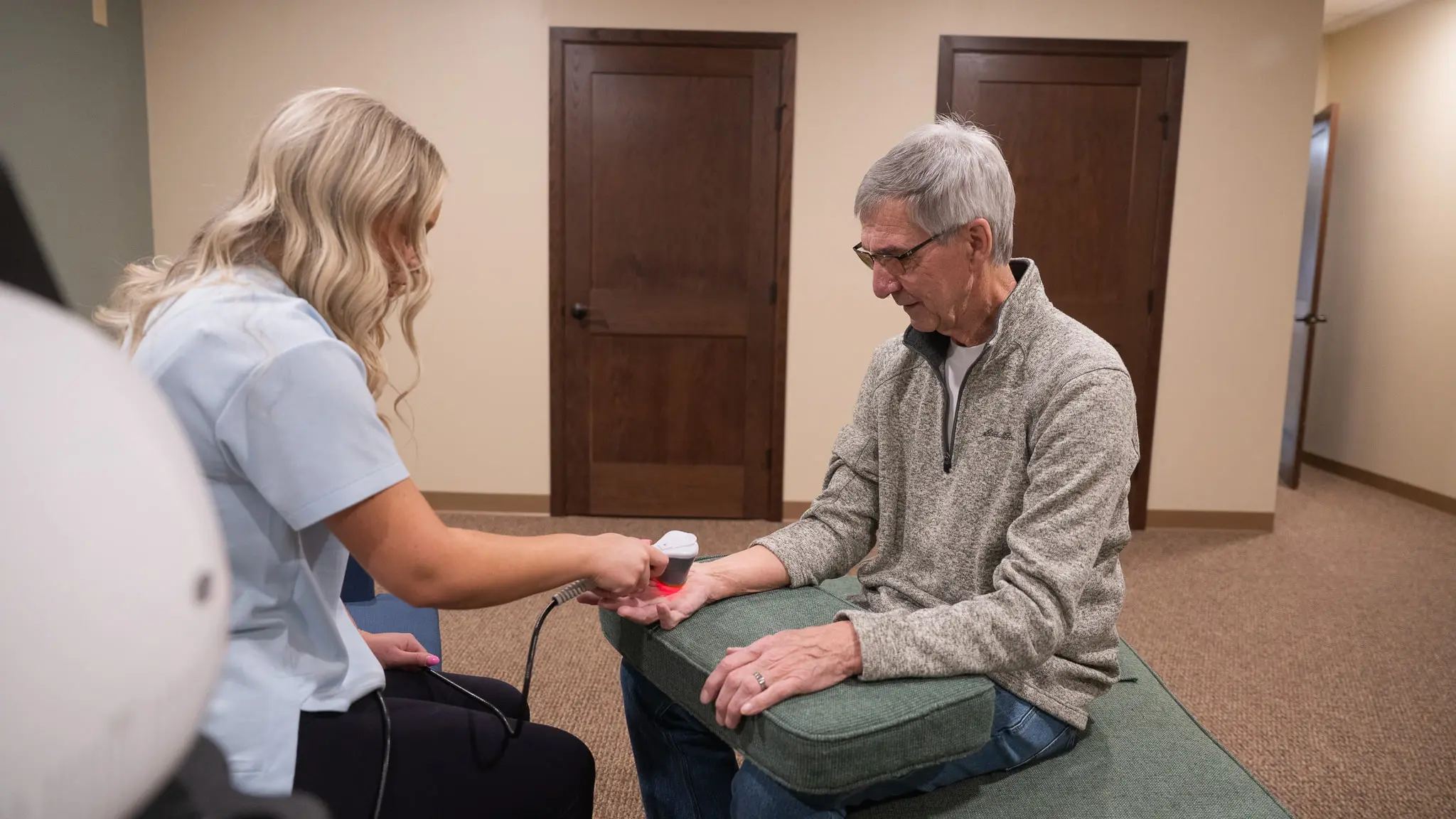
The laser therapy available at Leading Edge Chiropractic adds a powerful layer to soft tissue recovery. The Aspen Laser Apex system used at the practice is a Class IV therapeutic laser that delivers targeted light energy deep into the injured tissue.
At the cellular level, laser therapy stimulates the mitochondria inside cells to produce more energy. That accelerated energy production translates directly into faster tissue repair, reduced inflammation, and less pain. The tissue heals faster and with better quality than it would through the natural healing process alone.
For sprains and strains specifically, laser therapy helps in several ways:
- Reduces acute inflammation in the first 48 to 72 hours after injury
- Accelerates ligament and tendon fiber repair during the healing phase
- Decreases pain without medication, allowing earlier return to normal movement
- Improves circulation to the injured area, bringing the nutrients needed for tissue repair
- Reduces the formation of excessive scar tissue when used consistently through recovery
Sessions are comfortable and painless. Most patients feel nothing during treatment, and there is no downtime afterward. Laser therapy can be performed on the same visit as a chiropractic adjustment, making the combined approach efficient for patients with busy schedules in the La Crosse area.
How the Two Treatments Work Together
Chiropractic and laser therapy address the same injury from different angles. The adjustment restores proper joint mechanics and removes the structural interference that would otherwise slow the healing process. The laser accelerates the tissue repair happening at the cellular level.
Neither is a substitute for the other when both are indicated. An adjustment without laser therapy leaves inflammation and tissue damage unaddressed. Laser therapy without addressing joint misalignment means the tissue is healing in a mechanically compromised environment. Together, they produce outcomes that neither achieves as effectively on its own.
Dr. Chad determines whether laser therapy is appropriate based on the nature of the injury, how acute it is, and how the patient is responding to care. Not every sprain or strain requires laser therapy, but for moderate to significant soft tissue injuries, adding it to the plan consistently shortens recovery time.
Common Injuries Treated With This Approach
The combined chiropractic and laser approach at Leading Edge works well for a broad range of sprains and strains, including:
- Ankle sprains from sports, running, or uneven terrain
- Lower back strains from lifting, twisting, or sudden movements
- Neck strains from whiplash or awkward sleeping positions
- Shoulder and rotator cuff strains from overhead activity or throwing
- Hamstring and hip flexor strains in runners and field sport athletes
- Wrist and elbow sprains from falls or repetitive strain
Stop Waiting for It to Heal on Its Own
If you have a sprain or strain that has been lingering longer than it should, the tissue damage alone is probably not the whole story. Getting the joints evaluated and the inflammation properly addressed can make a real difference in how completely and how quickly you recover. Contact Leading Edge Chiropractic or call 608-526-2854 to schedule an evaluation with Dr. Chad in Holmen and find out what your recovery is actually missing.
Leading Edge Chiropractic serves Holmen, WI and the surrounding La Crosse area with precise, results-driven chiropractic care. Dr. Chad Updike and Dr. Katie Canar are both extensively trained in the Gonstead method, bringing a level of specificity and thoroughness to every patient that goes well beyond a standard adjustment. Dr. Chad serves as Team Chiropractor for the Holmen High School football team and has spent a decade on the board of the Chiropractic Society of Wisconsin, including two years as President. Dr. Katie graduated summa cum laude from Palmer College of Chiropractic, holds Webster Certification for prenatal care, and has completed hundreds of hours of advanced Gonstead training. Together they care for patients of all ages, from infants and student-athletes to active adults and seniors. If you’re ready to find out what’s actually driving your symptoms, contact Leading Edge Chiropractic today.